
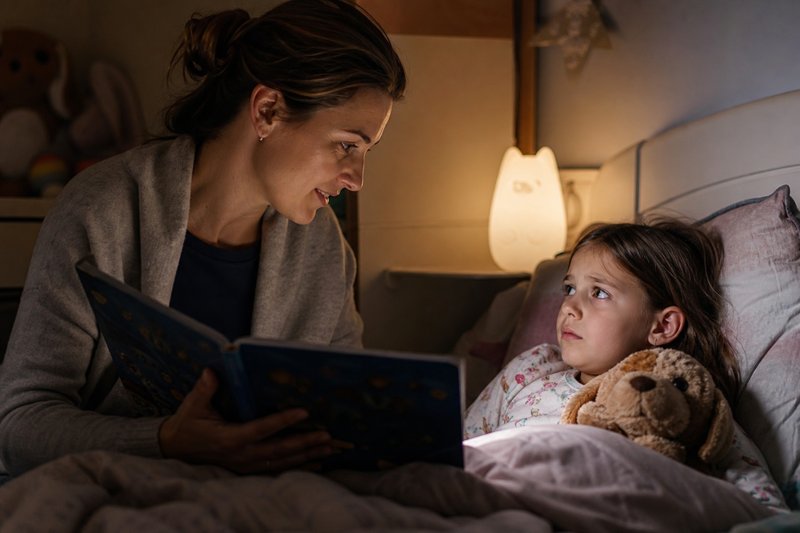
Bedtime Stories Teach Emotional Regulation
Kelly Anderson
Bedtime can bring out feelings that stayed tucked away all day. A child who seemed cheerful at dinner may suddenly worry about monsters, miss a grandparent, protest pajamas, or cry because the blue cup was washed instead of ready on the nightstand. These moments can feel small from the outside, but inside your child’s body, they can feel very big. That is why bedtime stories can be such a gentle tool for emotional learning. The right children’s books do more than fill the last minutes before sleep. They give your child words for feelings, show characters working through hard moments, and create a calm space where you can talk without pressure. When a story bear feels nervous, a bunny gets frustrated, or a zebra feels left out, your child can explore those emotions at a safe distance. You do not need a special script or a degree in child development to make bedtime reading emotionally supportive. You need a thoughtful book, a steady voice, and a willingness to listen. Over time, this simple ritual can help your child build confidence, self-expression, resilience, and a deeper sense of connection with you.
Choosing Bedtime Stories That Support Emotional Learning
The best bedtime stories for big feelings are not always the longest, fanciest, or most heavily praised. For young children, a helpful story often feels familiar, warm, and emotionally clear. It gives your child a character to care about and a feeling they can recognize.
Look for one clear emotional theme
When choosing children's books for bedtime, start by asking one simple question: What feeling does this story help my child understand? A book might focus on anger, jealousy, worry, sadness, courage, loneliness, patience, or saying sorry. It does not need to cover every emotion at once. In fact, young children often respond best when one feeling is gently centered. A story about a child who feels nervous before preschool may help your child name worry. A story about a fox who yells and then learns to breathe may open a door to talking about frustration. A book about missing someone can make sadness feel less lonely. Clear emotional themes help children connect the story to their own experiences without feeling overwhelmed.
Choose stories with emotional safety
Emotional safety means the story may include hard feelings, but it does not leave your child feeling alone with them. Look for books where a caring adult, friend, sibling, or even an inner voice helps the character feel supported. The ending does not have to be perfectly happy, but it should feel reassuring. For bedtime, be careful with stories that are highly suspenseful, frightening, or full of conflict that is not resolved. Some children enjoy excitement during the day but need softer stories at night. If your child is sensitive, choose books with gentle illustrations, predictable rhythms, and endings that bring the body back toward calm.
Notice whether the story teaches without lecturing
Children usually connect more deeply with stories than speeches. A book that says, “Do not be angry,” may not help as much as one that shows a character feeling angry, making a choice, and being comforted afterward. Gentle storytelling lets your child see that feelings are not bad. Feelings are signals. What matters is learning what to do with them. Strong emotional learning books show characters making mistakes, repairing hurt, asking for help, or trying again. This teaches resilience in a way that feels kind rather than shaming.
Preparing the Bedtime Reading Moment
A calming story begins before the first page. The way you set up the reading space can help your child’s body settle and make emotional conversation easier.
Create a predictable rhythm
Young children often feel safer when they know what comes next. A predictable bedtime rhythm might include pajamas, brushing teeth, choosing a book, reading together, a short cuddle, and lights out. The exact order is less important than the consistency. When bedtime reading has a familiar shape, your child can relax into it. This also makes it easier to introduce stories about big feelings. The routine itself becomes a message: You are safe. You are cared for. Your feelings can be here too.
Let your child have some choice
Choice gives children a small but meaningful sense of control at a time of day when many decisions are being made for them. You might offer two or three children's books and ask, “Which feeling story should we read tonight?” This keeps the choice manageable while still honoring your child’s voice. If your child chooses the same book many nights in a row, that is not a problem. Repetition is one way children process emotions. A repeated story may be helping your child understand something important, even if they cannot explain it yet.
Read your child’s cues before beginning
Some nights, your child may want to talk. Other nights, they may simply want your voice and closeness. Before you begin, notice their energy. Are they wiggly, tearful, silly, quiet, clingy, or overtired? Your child’s mood can guide how you read. If they are very tired, keep the conversation brief. If they seem emotionally full, pause more often. A bedtime story does not need to become a long lesson. Sometimes the most supportive thing you can do is read slowly, hold them close, and let the story do quiet work.
Reading in a Way That Helps Children Name Feelings
Once the book is open, your voice and your pauses matter as much as the words on the page. Reading for emotional learning is not about quizzing your child. It is about helping them notice what is happening inside the character and, gently, inside themselves.
Pause at emotional turning points
When a character’s face changes, a conflict begins, or a comforting moment arrives, pause for a few seconds. You might say, “Hmm, her shoulders look tight,” or “He is hiding behind the chair. I wonder what he feels.” These small observations help your child connect body language with emotion. Young children may not always know the word “anxious,” but they may understand a tummy that feels jumpy or hands that want to squeeze. Use simple feeling words first: mad, sad, scared, worried, proud, lonely, excited, calm. Over time, you can add more specific words like disappointed, embarrassed, frustrated, or relieved.
Ask gentle, open questions
Questions can invite self-expression, but too many can make reading feel like a test. Choose one or two soft questions during the story. Try, “What do you think he needs right now?” or “Have you ever felt like that?” If your child does not answer, that is okay. You can model an answer yourself: “I think I would want a hug if I felt that way.” This kind of conversation helps children understand that feelings can be talked about safely. It also shows them that you are interested in their inner world, not just their behavior.
Connect feelings to healthy actions
As you read, notice what the character does with their feelings. Did they take a breath? Ask for help? Use words? Take space? Try again? Apologize? Cry with someone nearby? These actions teach emotional management in a child-friendly way. You might say, “He was really mad, and then he stomped his feet outside instead of hurting his friend,” or “She told her dad she was scared, and they made a plan together.” This helps your child see that all feelings are allowed, but not every action is safe or kind.
Helping Your Child Express Emotions After the Story
The moments after a book can be tender. Your child may open up, change the subject, ask for another story, or quietly absorb what they heard. You can support emotional learning without forcing a big conversation.
Use simple reflection
After the story, reflect one feeling from the book. For example, “That bunny felt left out when the others played without him,” or “The child felt proud after trying again.” Then pause. Your child may respond with their own thought, or they may simply rest against you. Reflection builds emotional vocabulary without pressure. It also teaches your child that feelings can be noticed and named calmly.
Invite personal connection carefully
If your child seems open, you can make a gentle connection to their life. “Sometimes bedtime feels hard when you wish the day could keep going,” or “That reminded me of when you felt nervous before swim class.” Keep your tone warm and matter-of-fact. The goal is not to pull out a confession. The goal is to show your child that story feelings and real feelings can sit side by side. When children feel emotionally understood, they are more likely to share over time.
Offer a calming next step
Some books naturally lead to a small bedtime practice. A story about anger might lead to three slow breaths. A story about missing someone might lead to blowing a kiss toward a photo. A story about fear might lead to choosing a comfort object. Keep these practices short and soothing. Bedtime is not the time for long problem-solving. A simple ritual can help your child’s body learn, “I can feel something big, and I can also become calm again.”
zebra baby books emotional learning series
Disclaimer: Zebra Baby content is created for educational and storytelling purposes only and is not a substitute for professional medical, mental health, or therapeutic advice.