
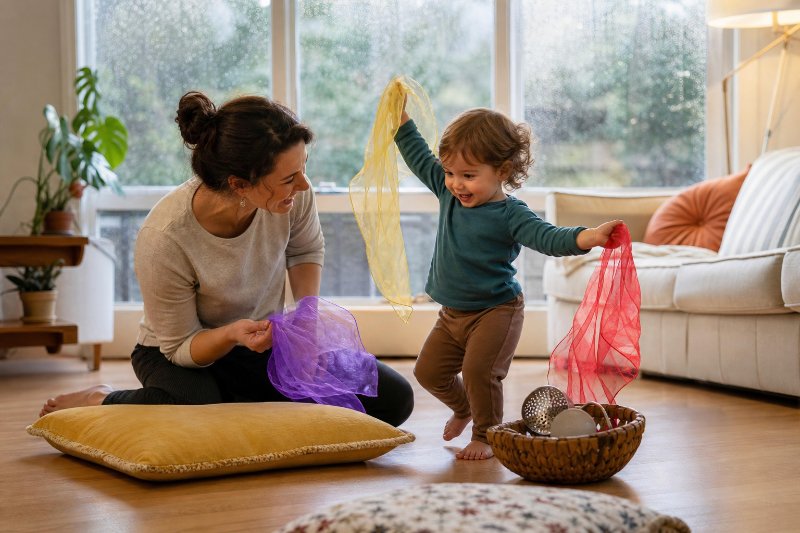
20 No-Prep Rainy Day Toddler Ideas
Kelly Anderson
Rain on the windows can change the whole mood of a toddler day. Plans shrink. Shoes stay by the door. Energy that usually goes into playground climbing, puddle stomping, and backyard wandering suddenly has nowhere obvious to go. And still, a rainy day does not have to become a day of constant entertaining. Toddlers do not need a bin of themed supplies, a craft plan, or a parent with unlimited energy. They need safety, connection, movement, and room to try things in their own way. The best rainy day activities for toddlers are often the simplest ones. A couch cushion becomes a mountain. A towel becomes a river. A cardboard box becomes a house, a boat, a cave, or a quiet corner. These no-prep moments can support emotional learning, self-expression, confidence, and resilience because your child gets to feel, move, imagine, and connect with you.
Why No-Prep Play Works So Well on Rainy Days
Rainy days can bring big feelings. Your toddler may feel restless, disappointed, clingy, or easily frustrated. That is not a failure on anyone’s part. Young children are still learning how to handle changes in plans, limits, boredom, and bursts of energy inside their bodies. Play helps. Penn State Extension explains that children learn through play, and that play offers sensory, physical, cognitive, and emotional experiences that help build brain connections through everyday exploration, as described in Play is Purposeful!. In plain parent language, that means stacking pillows, pretending to be animals, scribbling with crayons, or reading under a blanket can all be meaningful. The American Academy of Pediatrics also notes that play supports healthy development, nurturing relationships, and stress reduction, as shared in The Importance of Play. Rainy-day play is not just “keeping busy.” It is one of the ways your toddler practices flexibility, problem-solving, patience, language, and emotional safety. No-prep activities also protect your energy. You can offer a simple idea, stay nearby, and let your child shape the play. That kind of gentle storytelling in daily life often matters more than a beautifully arranged activity tray.
20 Rainy Day Activities for Toddlers That Need No Prep
These ideas use ordinary household space and materials. As always, choose what fits your child’s age, abilities, and safety needs. Stay close during active play, and skip anything that does not feel safe in your home.
Movement Activities for Wiggles and Restlessness
Pillow mountain: Place couch pillows on the floor and invite your child to climb, crawl, or flop safely. Keep the pile low and soft. You can narrate, “You made it over the mountain,” which adds confidence and language.
Animal parade: Call out familiar animals and move together. Stomp like elephants, hop like frogs, stretch like cats, or waddle like penguins. This gives toddlers a playful way to use energy without needing equipment.
Hallway marching band: March from room to room while clapping, humming, or tapping hands on your legs. If the noise level rises too much, turn it into a whisper parade for a calmer version.
Tape-free balance path: Use the edge of a rug, floorboards, or a line between tiles as a pretend path. Your child can walk slowly, tiptoe, or carry a stuffed animal across.
Freeze and melt: Dance together, then say “freeze.” After a moment, say “melt,” and slowly sink to the floor. This helps toddlers practice stopping and starting, which is useful for self-regulation.
The CDC’s early care guidance says toddlers should be allowed 60 to 90 minutes of moderate to vigorous physical activity during an 8-hour day, as noted in HIOPS for Physical Activity. Indoor movement can help fill that need when outdoor play is limited by rain.
Pretend Play for Imagination and Big Feelings
Blanket cave: Drape a blanket over chairs or your lap and let your child crawl in with a book or stuffed animal. A cozy hiding place can feel soothing when the day feels loud.
Stuffed animal doctor: Your toddler can check a bear’s ears, give a pretend bandage, or offer a hug. This kind of play often lets children express care, fear, and comfort in a safe way.
Rainy-day restaurant: Your child can serve pretend soup, crackers, or tea using safe kitchen items. You do not need toy food. Empty cups, spoons, and bowls are enough.
Laundry basket boat: A basket can become a boat crossing a rainy sea. Your child can sit inside if safe, or send stuffed animals across while you describe the waves.
Delivery helper: Ask your child to “deliver” socks, books, or stuffed animals to different rooms. This turns ordinary movement into purposeful play.
Quiet Activities for Tender or Tired Moments
Book nest: Pull a few books onto the floor and read wherever your child lands. HealthyChildren.org highlights indoor play ideas as ways for families to connect, including shared activities that deepen connection, in Indoor Play Ideas: Fun Ways for Families to Connect.
Picture walk: Instead of reading every word, look through a book and talk about the pictures. Ask gentle questions like, “How does the bunny feel?” or “What do you think happens next?”
Window watching: Sit together and notice raindrops, clouds, cars, umbrellas, or birds. This is simple, but it invites patience, attention, and shared wonder.
Stuffed animal storytime: Let your child choose a stuffed animal to “listen” to a story. Your toddler may tuck it in, pat it, or show it the pictures.
Feelings faces: Make happy, sad, surprised, sleepy, and frustrated faces together. Keep it light. You can say, “Your frustrated face tells me a lot,” which supports emotional vocabulary.
Sensory and Everyday Household Play
Safe kitchen band: Offer a wooden spoon and a pot, bowl, or plastic container. For a calmer sound, use hands on a pillow or tap fingers on the floor.
Water painting: Give your child a small cup of water and a clean paintbrush on a dark baking sheet, chalkboard, or patio door from the inside if safe. The marks disappear, which can feel magical.
Sock sorting: Dump clean socks on the floor and let your child match, toss, fold, or bury a toy. It may not help your laundry much, but it gives your toddler hands-on exploration.
Cardboard box world: Any box can become a tunnel, bed, garage, house, or drum. Let your child decide what it is. Open-ended play gives toddlers a sense of control.
Scarf or towel peekaboo: Use a scarf, small towel, or clean shirt for peekaboo, hiding toys, or making a pretend cape. Keep fabric away from the face during unsupervised moments.
Matching the Activity to Your Toddler’s Mood
When Your Child Is Bouncing Off the Walls
Start with movement rather than trying to force quiet. Pillow mountain, animal parade, hallway marching band, and delivery helper can help your child use their body. The National Association for the Education of Young Children notes that infant and toddler learning environments should offer materials and activities that support freedom of movement, as described in its Early Learning Program observation tool. At home, that can be as simple as clearing a safe patch of floor.
When Your Child Is Clingy or Sensitive
Choose connection over novelty. A book nest, blanket cave, window watching, or stuffed animal storytime can give your toddler closeness without demanding a lot from either of you. Sitting beside you may be the activity. Your calm presence becomes part of the play.
When Your Child Is Frustrated by the Rain
Name the feeling without trying to erase it. You might say, “You wanted the playground, and the rain changed our plan. That is disappointing.” Then offer a pretend bridge into play, such as a laundry basket boat or rainy-day restaurant. The feeling is allowed, and the day still has somewhere to go.
How to Keep Rainy-Day Play Simple and Safe
Offer Fewer Choices
Too many options can overwhelm a toddler. Instead of saying, “What do you want to do?” try offering two choices: “Do you want animal parade or book nest?” A small choice can help your child feel capable without putting them in charge of the whole afternoon.
Use What Is Already Out
No-prep really means no-prep. If there are pillows on the couch, they can become a mountain. If laundry is waiting, socks can become sorting play. If books are on the floor, storytime can begin right there. You do not have to make the house look like a preschool classroom.
Let Repetition Be Enough
Toddlers may want the same activity again and again. That is normal and often comforting. Repetition helps children practice skills, predict what comes next, and feel confident. If the animal parade happens three times in one day, it still counts.
Keep Emotional Safety at the Center
A rainy day can test everyone’s patience. If an activity falls apart, you can pause and reset. Your child is not failing at play, and you are not failing at parenting. Sometimes the best choice is a snack, a cuddle, a short book, or a quiet minute by the window.
A Gentler Way to Think About Rainy Days
Rainy-day activities for toddlers do not need to be elaborate to be meaningful. Movement games help restless bodies. Pretend play gives feelings a place to go. Books and quiet corners support parent-child connection. Everyday objects invite curiosity, self-expression, and confidence. The heart of no-prep play is not the activity itself. It is the message your child receives: “You are safe with me. Your feelings make sense. We can find our way through this day together.”
When rainy afternoons turn into tender bedtime moments, warm stories can help your child settle, feel understood, and carry that sense of emotional safety into sleep. The Zebra Baby series offers gentle storytelling and emotional learning books that help children feel safe, confident, proud of who they are, and supported through big feelings. You can explore the stories and resources at Zebra Baby’s children’s emotional learning book series.
Sources
HealthyChildren.org, Indoor Play Ideas: Fun Ways for Families to Connect
NAEYC, Early Learning Program: Quality Assessment and Accreditation Observation Tool
Disclaimer: Zebra Baby content is created for educational and storytelling purposes only and is not a substitute for professional medical, mental health, or therapeutic advice.
Related Articles
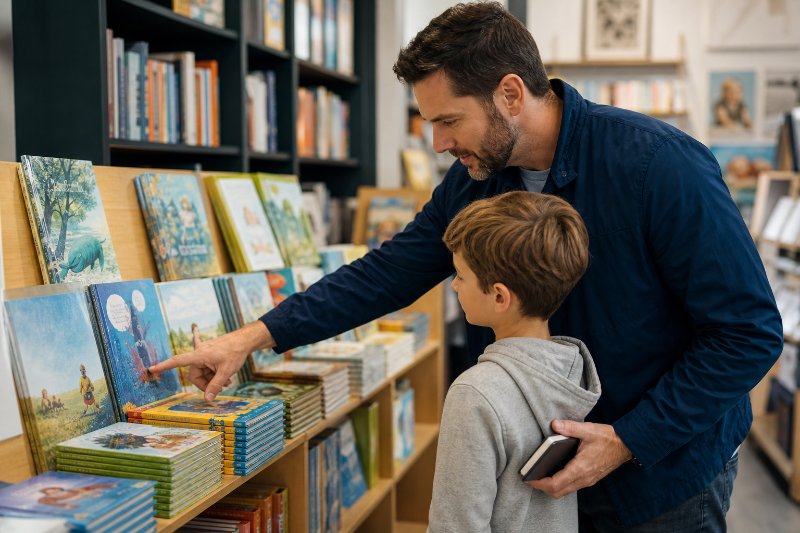
How To Choose The Best Emotional Learning Books for Kids
The best picks use story, not lectures, to build empathy and emotional literacy, helping children practice feelings through characters who are sad, angry, left out, or brave.
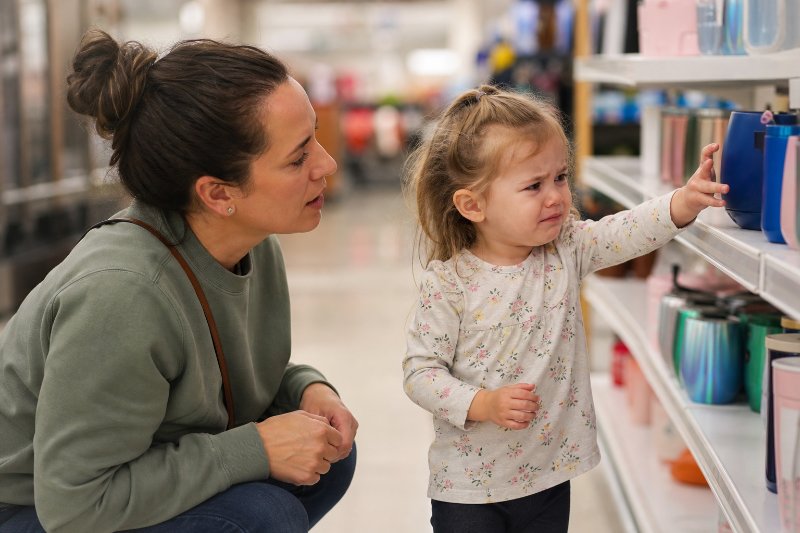
Helping Children Handle Disappointment
Children need help naming disappointment before they can manage it, and calm, steady responses teach that hard feelings are safe to feel. Over time, small letdowns become practice for resilience, patience, and trust.
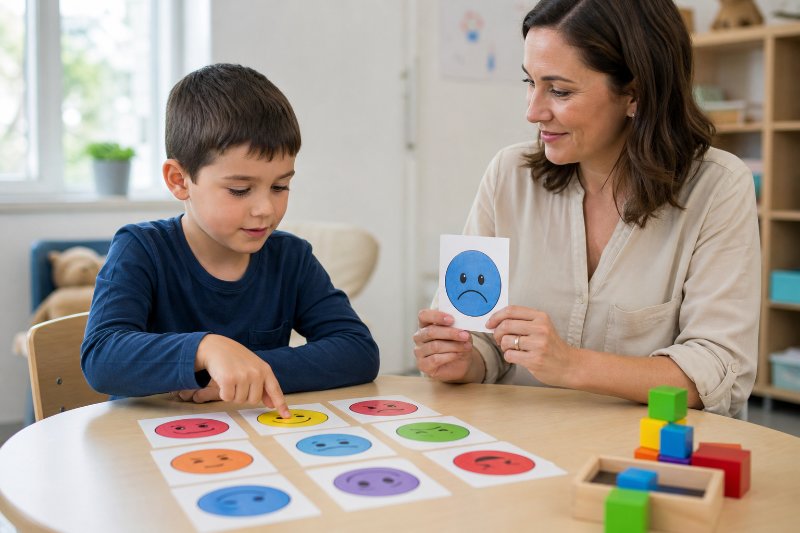
Social vs. Emotional Learning for Kids
Social and emotional learning is less about calming down in the moment than building the relationship skills that help children wait, take turns, handle “no,” and repair hurt. Those small habits shape how they belong at home, in school, and with friends.