
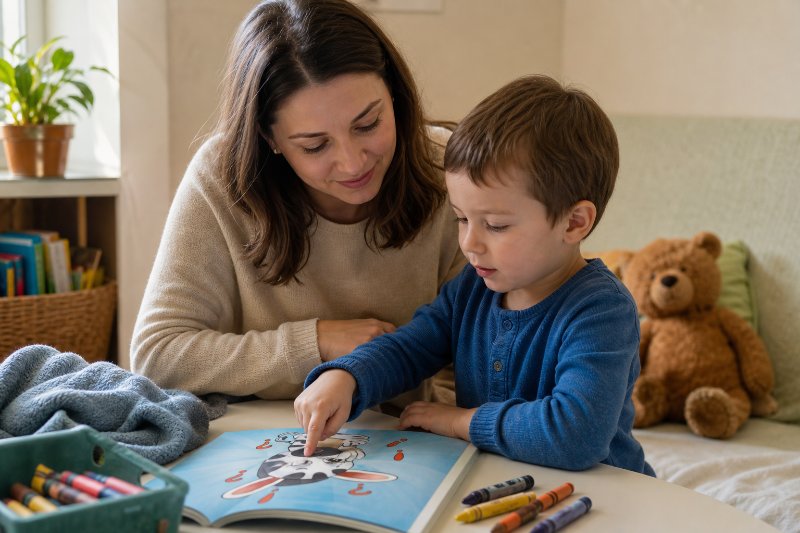
Social Emotional Learning Books vs. Stories
When your child has a huge feeling, the moment can feel tender and confusing. A toy breaks, a goodbye feels too big, bedtime brings worries to the surface, or a sibling grabs the favorite cup. You may want to respond with patience, but you also need words your child can understand. That is where social emotional learning books in Portland can become a gentle, steady bridge between what your child feels and what they are learning to express. For families in Portland, Oregon, story time often becomes more than a cozy routine. It becomes a place to practice naming feelings, calming the body, repairing after conflict, and building confidence. Zebra Baby creates children’s emotional learning books and bedtime stories designed to support early childhood emotional safety, parent-child connection, and self-expression through gentle storytelling. The right book does not lecture your child. It gives them a character to relate to, a feeling they recognize, and a simple path toward resilience. When you choose thoughtfully, social emotional learning books in Portland can help your child feel seen, not shamed, while giving you language to use long after the story ends.
How Emotional Learning Books Help Children Understand Big Feelings
Social and emotional learning means helping children notice feelings, understand relationships, make caring choices, and manage emotional waves in healthy ways. For young children, this learning does not usually happen through long explanations. It happens through repetition, rhythm, pictures, familiar routines, and warm adult connection. Books are especially powerful because they slow the moment down. In real life, your child may be too upset to talk about sharing, fear, sadness, anger, or disappointment. In a story, the feeling belongs to a character first. Your child can observe it from a safe distance. They can wonder, “Why is the character sad?” or “What helped them feel calm?” without feeling put on the spot.
Stories give feelings a name
Many young children feel emotions in their bodies before they can name them. A tight chest, clenched fists, tears, hiding, shouting, or running away may all be ways of saying, “Something feels too big.” Children’s emotional learning books help translate those signals into simple words, such as mad, worried, lonely, excited, embarrassed, or proud. This matters because naming a feeling can reduce its intensity. When your child learns to say, “I feel frustrated,” they have taken a step toward emotional regulation. They are no longer only inside the feeling. They are beginning to understand it.
Gentle storytelling supports emotional safety
Emotional safety means your child knows feelings are allowed, even when certain behaviors need guidance. A story can show that a character may feel angry and still be loved. A character may make a mistake and still have a chance to repair. A character may be nervous and still try something new. This is one reason families look for Portland social emotional learning books rather than only general picture books. They want stories that reflect early childhood honestly, with warmth and respect. The goal is not to make children cheerful all the time. The goal is to help them feel secure enough to understand themselves.
Books build shared language between parent and child
When a phrase from a book becomes part of your family’s language, it can help during hard moments. Maybe a bedtime story talks about taking a “slow balloon breath,” asking for a hug, using brave words, or trying again after a mistake. Later, when your child struggles, you can gently refer back to the story. Instead of saying, “Stop crying,” you might say, “This feels like the big feeling from our story. Should we take a slow breath together?” That kind of language protects connection. It also gives your child a practical tool they already understand.
What to Look for in Social-Emotional Books for Young Children
Choosing books for kids can feel surprisingly personal. Some stories are beautiful but too advanced. Others teach a lesson, but the tone feels harsh or preachy. For emotional learning, the best books usually feel simple, warm, and respectful of your child’s inner world.
Choose stories that match your child’s developmental stage
For toddlers and preschoolers, short text, expressive illustrations, and clear emotional arcs are helpful. A young child does not need a complicated plot to learn about frustration, courage, empathy, or sadness. They need a story they can follow and return to again. For children ages 2 to 6, repetition is not a flaw. It is part of the learning. When your child asks for the same book night after night, they may be practicing emotional understanding. The familiar story gives them comfort, and each reading lets them notice something new.
Look for emotional honesty, not forced cheerfulness
A strong emotional learning book does not rush a child out of a feeling. It allows the character to experience the feeling, receive support, and discover a manageable next step. This is important because children can sense when a story skips over the hard part. If a book says, “The child was sad, then suddenly everything was fine,” your child may not feel deeply understood. But if a story shows sadness, comfort, patience, and gradual relief, it mirrors real emotional growth. That kind of storytelling can help your child trust the process of calming down.
Notice how the adults in the story respond
In helpful kid’s books about emotions, adults are not always perfect, but they are caring and steady. They listen. They set limits gently. They help children repair when needed. They do not shame the character for having feelings. This matters because children learn from the emotional tone of a book, not only the words. If a story models compassion and connection, it can support the way you want your home to feel during difficult moments.
Choose books that invite conversation without pressure
The best conversations after a story are often small. You do not need to turn bedtime into a lesson. A gentle question may be enough: “Have you ever felt that way?” or “What do you think helped the character?” If your child does not answer, that is okay. They may still be absorbing the message. Social-emotional learning resources work best when they feel woven into daily life rather than added as another task. A bedtime story, a quiet afternoon read, or a calm moment after preschool can all become opportunities for emotional learning.
Using Books at Home for Calmer Routines and Stronger Connection
A book becomes more meaningful when it is paired with your presence. Your voice, facial expressions, pauses, and gentle attention tell your child, “You are safe with me.” This is why bedtime stories can be such a powerful part of emotional regulation support for young children.
Read when your child is calm, not only during hard moments
It is natural to reach for a feelings book when your child is upset. Sometimes that helps. But emotional learning is often easier when your child is already calm. Reading during peaceful moments builds the emotional tools before they are urgently needed. Think of stories as practice. Your child practices recognizing a worried face, hearing calming words, and imagining a kind response. Then, when real frustration appears, those ideas are already familiar.
Use your voice to model calm
Children listen to more than the storyline. They listen to your pace and tone. When you slow down during a tender page, soften your voice during a comforting moment, or pause after a character makes a choice, you help your child feel the emotional rhythm of the story. This is one of the quiet strengths of social-emotional learning books for Portland families. They can support not only children, but also parents who want a calmer way to talk about behavior, conflict, and feelings.
Let your child respond in their own way
Some children talk a lot during books. Others point, wiggle, repeat a phrase, or stay quiet. All of these can be meaningful. A child who does not discuss the story may later act it out with toys or repeat a line during play. You do not have to force a deep conversation. You can simply notice: “That part made you smile,” or “You looked very serious when the character felt left out.” Gentle observations invite self-expression without pressure.
Keep books visible and easy to revisit
Children often return to the stories that meet an emotional need. A book about separation may become important before school. A story about anger may be requested after sibling conflict. A book about confidence may become a favorite before trying something new. Keeping a small group of emotional learning books within reach allows your child to choose what they need. Choice itself supports confidence. It tells your child their inner life matters.
Misconceptions About Emotional Learning Books
Many parents wonder whether books can truly help with big feelings. The answer is yes, when expectations are realistic. Books are not a quick cure for tantrums, anxiety, aggression, or sleep struggles. They are one supportive tool within a loving relationship and, when needed, alongside professional guidance.
Misconception: Emotional learning books are only for children who struggle
Every child benefits from learning how feelings work. Confident children still need empathy. Quiet children still need self-expression. Highly verbal children still need help calming their bodies. Social emotional learning books near Portland are not only for moments of concern. They are also for everyday growth. Reading about emotions before a child is overwhelmed can make hard moments less frightening. It gives your child language for experiences that are part of being human.
Misconception: A book has to teach an obvious lesson
Some of the most effective children’s book series do not feel like lessons at all. They feel like gentle companionship. A character tries, worries, cries, repairs, rests, or learns to ask for help. The message lives inside the story. Children may resist being instructed, especially when emotions are high. But they often welcome a story that helps them feel understood. That is why gentle storytelling can be more powerful than direct correction.
Misconception: Parents need special training to use these books well
You do not need formal training to make emotional learning books useful at home. Your warmth is the most important part. Read slowly. Stay curious. Let your child interrupt. Revisit pages that seem to matter. Use the story’s language later in simple, loving ways. Parenting content can offer helpful ideas, but it should never make you feel inadequate. The goal is not to perform story time perfectly. The goal is to create small, repeatable moments of connection.
zebra baby books emotional learning series
Disclaimer: Zebra Baby content is created for educational and storytelling purposes only and is not a substitute for professional medical, mental health, or therapeutic advice.
Related Articles
Welcome to the Zebra Baby Blog
A gentle hello from Kelly: why these stories exist, and how to use them when big feelings show up at home.
The Baby Books Mistake Portland Parents Make
The biggest mistake is choosing baby books that teach facts but skip feelings. Stories with repetition, comfort, and simple emotional language help babies and toddlers recognize what they feel and build trust at bedtime.
Bedtime Stories Teach Emotional Regulation
Bedtime stories work best when one clear feeling takes center stage, like worry, anger, or sadness. The right children's books make big emotions easier to name and discuss, without overwhelming a child at the end of the day.