

7 Things to Say During a Toddler Meltdown (Not “Calm Down”)
Kelly Anderson
“Calm down” can slip out before you have time to think. Your toddler is sobbing because a banana broke, you are trying to get breakfast onto the table, and everyone’s patience feels thin. You want to help, but the words available in that moment are not always the words you would choose afterward.
You do not need a polished speech. You need a few short phrases that offer comfort, protect safety, and leave room for a firm boundary.
These seven things to say during a toddler meltdown are not magic words. Think of them as steady handrails for you: simple language you can return to when your child’s big feelings fill the room.
What Your Words Can Offer During a Meltdown
Instead of making “stop crying” the immediate goal, aim to communicate three things: you are present, the feeling is allowed, and unsafe behavior will be stopped.
That does not require a conversation. Cleveland Clinic’s guidance on toddler tantrums recommends avoiding long explanations or deeper discussions about feelings while a child is mid-meltdown. A brief sentence followed by quiet space is a practical alternative to repeating yourself more loudly.
Timing matters, too. The CDC’s tips for noticing and naming emotions recommend waiting until both you and your child are calm before fuller emotion coaching. You can offer reassurance now without trying to teach an entire lesson.
You also do not have to choose between kindness and limits. A warm response can accompany an unchanged decision about leaving the playground, turning off a screen, or keeping someone’s body safe.
Seven Phrases to Keep Within Reach
“I’m here.”
Start here when you cannot tell what your child needs or when any additional words seem unwelcome. You are offering your presence, not asking your toddler to explain, agree, or perform calmness.
Say it once in an ordinary, gentle voice. Stay close enough to supervise safely without crowding your child. You do not need to fill every pause.
First Things First’s guidance on responding to toddler tantrums supports keeping your response simple and supportive when your child is safe. “I’m here” gives you a way to do exactly that, without turning reassurance into a stream of instructions.
“You really wanted that.”
This phrase acknowledges the wish underneath the protest. You can recognize disappointment without agreeing that your child must get what they wanted.
When your toddler reaches for a sibling’s birthday present, you might say, “You really wanted that. It belongs to your sister.” Then pause. There is no need to explain sharing, ownership, and fairness while your child is screaming.
If you are unsure what caused the upset, avoid inventing an explanation. Try, “Something feels hard right now.” Your goal is to show interest in your child’s experience, not prove that you understand every detail.
“It’s okay to feel angry. I won’t let you hit.”
Use this when you need to separate the feeling from the action. Anger is not the boundary. Hitting is.
Pair your words with protective action: move another child away, place a thrown object out of reach, or gently block a strike if needed. Use only the physical intervention necessary for immediate safety, not force to make your child stop expressing emotion.
You can adapt the wording: “You’re upset. I won’t let you throw the cup.” For more language that holds both compassion and boundaries, read about acknowledging big feelings without giving up limits.
“You don’t have to talk right now.”
Sometimes the most useful thing you can remove is the demand for an answer. Set aside questions such as “Why are you doing this?” or “Can you tell me what’s wrong?”
Offer permission to be quiet. You can say, “You don’t have to talk right now. I’m nearby,” and leave the conversation there.
Do not require eye contact, an explanation, or an apology as the price of your presence. You can return to what happened later. In this moment, your child does not need to produce the right words before you respond with care.
“Would you like a hug, or some space?”
Offer this only when your child seems able to hear a simple choice. Both answers need to be genuinely acceptable.
If your toddler reaches toward you, offer the hug. If they pull away, respect that signal while maintaining safe supervision. Space does not mean leaving a distressed toddler alone in an unsafe place.
If there is no answer, stop asking. You might quietly say, “I’ll sit nearby.” Avoid insisting that affection is the solution or taking a refused hug personally. You are making comfort available, not requiring your child to receive it in one particular way.
“I’ll help you get somewhere quieter.”
Use this when your surroundings make it difficult to stay safely with your child, such as a crowded checkout area or a noisy family gathering. Name what you are about to do rather than issuing a threat.
When possible, offer your hand and move to a nearby, supervised space. If you must move your child for immediate safety, keep your explanation brief and your handling as gentle as circumstances allow.
The quieter place is not a punishment. You are not saying, “Nobody wants to hear you.” You are making room to respond without an audience or extra activity around you.
“The answer is still no. I’m here with you.”
This phrase is for the moment when reassurance starts to feel like negotiation. You have acknowledged the wish, but the limit remains.
For example: “No more cookies right now. I’m here with you.” You do not need to add five reasons or seek your toddler’s approval of the decision.
Keep the delivery matter-of-fact rather than challenging. The message is not “crying will never work.” It is “this boundary remains, and you do not lose my care because you dislike it.” Emotional safety and a clear no can belong in the same response.
Match the Words to What Is Happening
You do not need to use all seven phrases during one meltdown. Choose the sentence that fits the immediate need, then allow a pause.
When a toy is flying, prioritize the safety boundary. When your child turns away from touch, offer space without withdrawing your presence. When the distress centers on a limit, acknowledge the wish without reopening the decision.
Adjust the wording to your child’s language. “Here with you” may feel more natural than a complete sentence. A familiar phrase in the language you speak at home is welcome, too. This is support, not a script-reading exercise.
If your words seem to add frustration, you can stop talking while staying attentive. Judge your response by whether you are protecting safety and offering steady care, not by how quickly the crying ends.
Give Yourself Something Simple to Practice
Choose two phrases you can remember under pressure: one for connection and one for limits. Keep them in a phone note or share them with another caregiver so you have language to reach for without searching.
Give yourself a brief pause before speaking, when safety allows. Lower your shoulders, release your jaw, and choose the shortest useful sentence. You are allowed to feel frustrated while choosing a gentler response.
Following the CDC’s recommendation to save emotion coaching for a calm moment, revisit the experience later with a small invitation: “You wanted the toy. What could you say next time?” Offer help rather than a quiz, and leave room for your child not to answer.
If episodes raise concerns about safety or your ability to cope, ask your child’s pediatrician for individualized guidance. You do not have to manage those concerns alone.
A Steady Response Matters More Than a Perfect Sentence
You will not always find the words you intended. You can begin again: “That came out too loud. I’m here.” The aim is not silence on demand. It is a response that makes room for feelings while keeping boundaries clear.
The reassurance you offer during hard moments can also have a place in your bedtime stories. Explore Zebra Baby’s emotional learning books and resources for warm storytelling that supports feeling safe, confident, understood, and proud of who you are. You can also browse the Zebra Baby paperback series on Amazon and choose a story that reflects the feelings your child is learning to express.
Sources
Cleveland Clinic: How To Deal With (and Maybe Even Prevent) Toddler Tantrums
First Things First: Managing Big Feelings: Toddler tantrums and how parents can respond with calm
Disclaimer: Zebra Baby content is created for educational and storytelling purposes only and is not a substitute for professional medical, mental health, or therapeutic advice.
Related Articles

Screen Time and Emotional Development: What Parents Need
Screen use matters less as a single minute count than as part of a child’s emotional routine: content, context, and reliance on devices for soothing can shape chances to practice managing feelings.
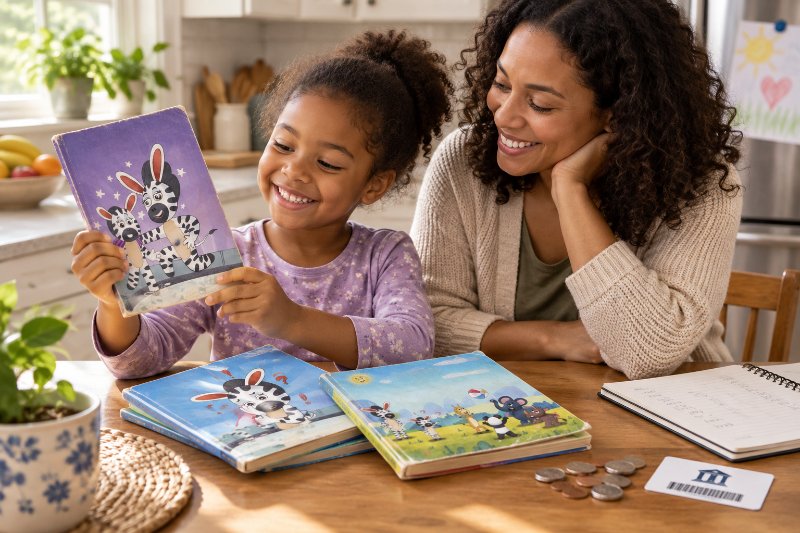
What a Kids' Book Actually Costs
Kids Books need not fill every shelf: own the comfort titles children revisit, borrow short-lived interests, and buy reference books only after they prove useful, keeping reading access affordable.

How to Help a Child With Big Emotions: 10 Parent Tips
Big emotions are not problems to erase. By staying calm, looking beneath behavior, and holding clear boundaries, parents can keep children safe while helping them build regulation skills over time.