
Screen Time and Emotional Development: What Parents Need
Kelly Anderson
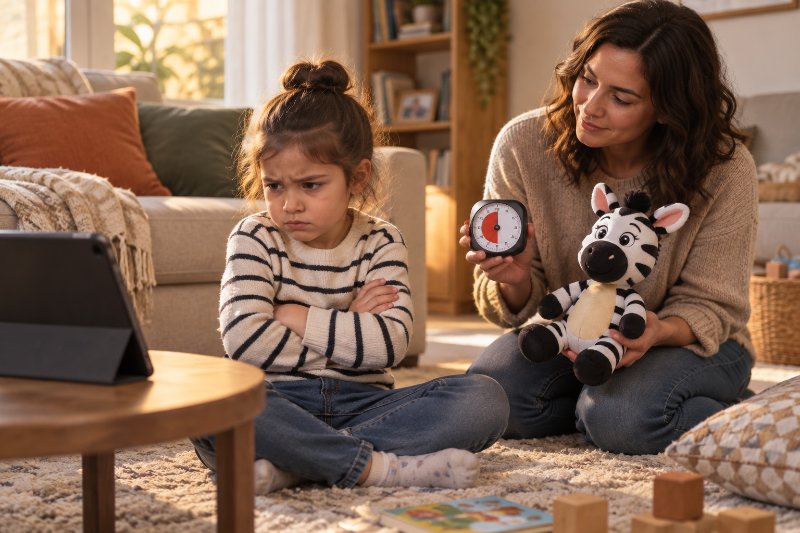
The show ends, but your child’s feelings do not. They want another episode, you need to start dinner, and a quiet afternoon suddenly feels tense. You may wonder whether the screen caused the struggle or simply made an already difficult transition more visible.
That question deserves more than a rule about minutes. Screen use and emotional learning intersect through what your child watches, why a device is offered, and what happens around it. You can make thoughtful choices without treating every video as harmful or every screen-free activity as a lesson.
Storytelling offers a different kind of space: room to pause, wonder, disagree, and feel understood. The goal is not to replace every screen with a book. It is to protect everyday opportunities for your child to practice being with their feelings, with you nearby.
Why Screen Habits Deserve a Closer Look
For your family, a screen might provide entertainment, contact with relatives, accessibility support, or a necessary break while you manage another task. Start by recognizing its purpose rather than judging its presence.
The American Academy of Pediatrics’ 2026 policy on children and digital media recognizes benefits from high-quality educational media while warning that using devices for soothing can displace opportunities to develop emotion-management skills. That distinction matters: enjoying a program is not the same as relying on it whenever discomfort appears.
Meanwhile, a 2026 study of screen exposure and emotion regulation in children ages 5–6 found that greater exposure was associated with weaker emotion regulation. An association does not establish that screens caused the difficulty. These findings should prompt thoughtful observation, not a diagnosis based on your child’s viewing habits.
A useful question is, “What opportunities does our current routine leave for talking, moving, resting, and recovering from frustration?” This keeps your attention on your child’s whole day rather than a single number.
What to Weigh Beyond Screen-Time Minutes
The content and the way it is delivered
Look past an “educational” label. Watch enough to notice how characters respond to disappointment, whether conflict ends through kindness or humiliation, and whether emotions are treated with respect. Ask yourself whether you would feel comfortable talking through those messages afterward.
Also consider how viewing ends. Autoplay, endless recommendations, and unclear stopping points can make a boundary harder to communicate. When possible, choose a specific episode or activity with an ending you can explain beforehand. You do not have to evaluate every program perfectly to make a more intentional choice.
The role you can realistically play
You cannot sit beside your child for every minute of screen use. When you can join them, try a brief observation instead of a stream of questions: “That character wanted a turn and looked disappointed.” Leave space for your child to respond or simply keep watching.
Later, you might connect the story to something familiar without assigning your child a label. “Waiting looked hard for that bear” feels different from “That bear was impatient, just like you.” Keep the conversation curious rather than corrective.
What the screen is replacing
Consider the particular moment. Is a program filling a stretch while you prepare food, or regularly taking the place of bedtime conversation? Is your child still getting opportunities for play, connection, sleep, and movement?
Duration remains worth noticing, but context gives it meaning. You might decide that a shared family movie fits comfortably while a short, nightly scroll crowds out the only unhurried conversation of the evening. Choose a change based on what you want to protect.
Questions Parents Ask About Screens and Big Feelings
Does a meltdown after viewing mean screens are harmful?
A difficult ending alone cannot tell you that. Consider whether your child is tired, hungry, surprised by the limit, or upset about leaving something enjoyable. You do not have to settle the cause before responding warmly and keeping the boundary.
You might say, “You really wanted more. The show is finished, and you can be upset.” Offer closeness if it is welcome. Avoid making immediate calmness the test of whether your limit was reasonable.
Is using a device for comfort always wrong?
You do not need to judge an occasional choice during travel, illness, or an overwhelming day as a verdict on your parenting. The more useful question is whether you have other forms of comfort available, too.
The AAP’s caution about devices used for soothing concerns displaced emotional-learning opportunities. In practice, you can keep a wider comfort menu: sitting together, holding a familiar toy, taking a quiet break, or hearing a short story. Offer rather than force these choices.
Are books automatically better than digital stories?
A printed page does not guarantee connection. Reading can become pressured if your child must identify every feeling or give the “right” answer. Conversely, you can bring warmth and conversation to a digital story.
Print offers a practical alternative because you can linger on an illustration, skip a passage, or close the book without another episode appearing. Use that flexibility to follow your child’s interest, not to turn storytime into a test.
Make Room for Stories Without Starting a Battle
Choose one moment worth reclaiming
Rather than announcing a household overhaul, choose a manageable pocket of the day. Perhaps you want breakfast to include conversation, or the final part of bedtime to feel less crowded. Explain the change simply: “After pajamas, the tablet rests. You can choose a story or sit with me.”
Keep the alternative easy to access. Put a few familiar books where you already settle together. Library books, wordless picturebooks, and stories you invent all count. You do not need a new purchase or an elaborate reading space.
Let the story hold the feeling
Choose a plot that leaves room for ordinary emotional experiences: wanting attention, feeling excluded, losing something, or needing help. Look for characters whose feelings are acknowledged even when their behavior needs a limit.
As you read, offer one gentle opening: “What do you think she wished someone understood?” If your child does not answer, continue. You can wonder aloud without requiring participation: “Maybe she wanted company, not advice.”
For broader context, this explanation of emotional learning before kindergarten explores naming feelings, communicating needs, and recovering from frustration. During a story, you can focus on just one of those ideas rather than covering everything.
Leave room for unfinished feelings
You do not need to end every story discussion with a happy resolution. Try noticing that a character still feels disappointed but accepts help, or remains nervous while choosing to participate. Invite the possibility that a feeling can stay while an action changes.
Afterward, offer playful self-expression if your child seems interested. They might draw another ending, give a stuffed animal a voice, or ask you to retell one scene. If they prefer to move on, let the story remain a shared experience rather than an assignment.
Keep support separate from compliance
When a screen turns off, do not require your child to enjoy the replacement immediately. You can hold the limit and acknowledge their preference: “You wanted the video, not this book. The book will be here if you want it.”
If distress feels persistent, intense, or disruptive across daily life, discuss your concerns with your child’s pediatrician. Stories can be part of a supportive routine, but they should not carry the responsibility for addressing every emotional difficulty.
A More Connected Routine, Not a Screen-Free Ideal
You can approach screens with both boundaries and flexibility. Notice the content, the purpose, and the space left for other experiences. Then make room for stories without demanding that they produce immediate calm. Your aim is a routine where feelings can be expressed, limits remain clear, and connection is available.
A shared story can be a gentle place to begin that shift. Explore Zebra Baby’s emotional learning books and storytelling resources for warm, relatable stories designed to support emotional safety, confidence, and pride in who your child is. You can also browse the Zebra Baby paperback series on Amazon and choose a story that speaks to feelings your child is learning to express.
Sources
Disclaimer: Zebra Baby content is created for educational and storytelling purposes only and is not a substitute for professional medical, mental health, or therapeutic advice.
Related Articles

What a Kids' Book Actually Costs
Kids Books need not fill every shelf: own the comfort titles children revisit, borrow short-lived interests, and buy reference books only after they prove useful, keeping reading access affordable.

How to Help a Child With Big Emotions: 10 Parent Tips
Big emotions are not problems to erase. By staying calm, looking beneath behavior, and holding clear boundaries, parents can keep children safe while helping them build regulation skills over time.

Sharing vs. Taking Turns: What Toddlers Need to Learn
Clear requests help toddlers build generosity and boundaries: sharing can mean using an item together or offering part, while taking turns means each child gets separate time with it.