
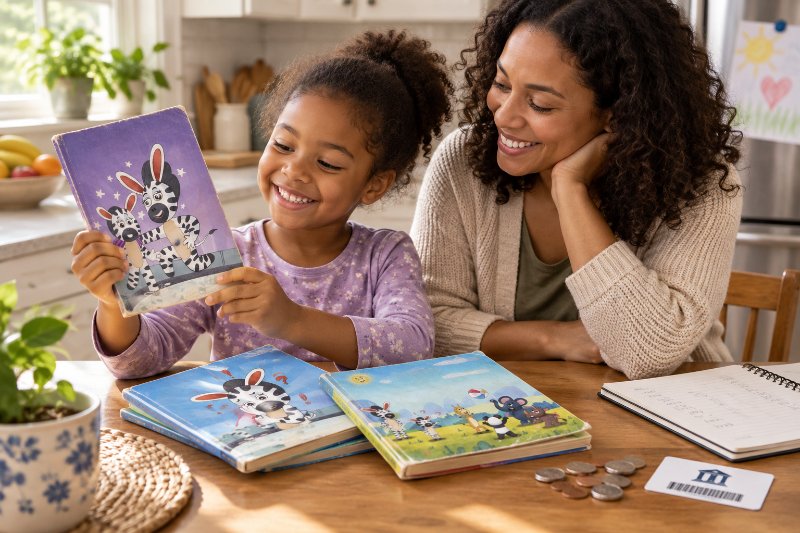
What a Kids' Book Actually Costs
Kelly Anderson
A paperback at checkout, a school book fair flyer, a birthday wish list: the cost of children’s reading can add up quietly. You want your child to have stories that feel comforting, interesting, and worth returning to. But you do not need a large shopping budget to make that happen.
A thoughtful approach to kids books starts with a different question than “Which titles should you buy?” Ask instead, “Which stories does your family need to own, and which can you enjoy through borrowing or sharing?” That distinction can protect your budget while leaving plenty of room for curiosity, emotional learning, and parent-child connection.
Here is how to compare the options, spend where it matters, and build reliable access to reading without feeling pressured to fill every shelf.
What You Need to Plan a Budget for Kids Books
Start with what you already have: a few familiar favorites, access to a library if available, and an amount you can comfortably spend. That amount can be zero. A reading routine depends more on accessible stories and shared attention than on owning new releases.
Before shopping, notice which books your child requests, which remain untouched, and which are no longer comfortable to use. You are looking for gaps, not reasons to replace everything.
Give your books three practical roles
Think of your collection as having three jobs. Comfort books provide familiar words and predictable endings. Exploration books introduce temporary interests, such as bridges, moths, or musical instruments. Reference books answer questions your child may return to over time.
These roles help you decide where money goes. Comfort books often justify ownership because children may want them without warning. Exploration books are excellent borrowing candidates. Reference books may be worth buying once you know their explanations suit your child.
Budgeting for kids books becomes simpler when you match the spending decision to the book’s likely role, rather than its cover or popularity.
What Kids Books Typically Cost
For planning purposes, many new trade board books and paperbacks cost roughly $5 to $12, while hardcover picture books often fall around $15 to $25. These are broad estimates, not fixed prices. Size, publisher, special features, retailer, and discounts all affect the amount you pay.
Used copies may cost only a few dollars, though shipping can erase the savings. Library borrowing generally has no per-book charge for eligible cardholders, but local rules may include replacement charges, overdue fines, or fees for some nonresident memberships.
Compare the total cost, not just the sticker
When comparing kids books, include delivery fees, travel, storage, and replacement needs. A low-priced bundle is not necessarily good value if most of its contents will go unread. A durable favorite may serve your family better than several bargain purchases chosen in a hurry.
You can also think about cost per use without turning reading into accounting. A $10 book enjoyed 40 times costs 25 cents per reading. That does not make a borrowed book read once less valuable. It simply explains why paying for a proven favorite can be sensible.
Allow room for preferences to change
Your child may be absorbed in construction vehicles one month and ocean animals the next. Keep some flexibility rather than committing your entire budget to a single subject or series. Borrowing gives those changing interests space to develop without making each new curiosity a purchase.
Borrowing Kids Books Before You Buy
Your library can function as a place to try stories without pressure. You and your child can explore an unfamiliar author, test a longer read-aloud, or find out whether a heavily illustrated nonfiction book holds their interest. Finishing every borrowed book is not required.
Ask a children’s librarian about borrowing limits, renewal policies, holds, and requests from other branches. Some systems also offer book bundles, accessible formats, or digital borrowing. Availability varies, so checking first can save you an unnecessary trip.
Make borrowing manageable
Choose a borrowing quantity that you can keep track of easily. Store library materials in one bag or basket, apart from books you own. If your library offers reminders, turn them on. Renew a favorite when permitted, or return it and place another hold.
Borrowed kids books also give you useful information before spending. Notice whether your child requests a particular story on different days, refers to its characters during play, or enjoys it even after the surprise has faded. Those patterns suggest lasting interest more reliably than one enthusiastic first reading.
Use alternatives when library access is limited
A swap with another family, a school lending program, or a community book exchange may help. Agree on whether books are gifts, trades, or loans before taking them home. For swaps involving young children, choose copies everyone is comfortable seeing gently worn.
Digital library books can also expand access where offered. Check device compatibility and borrowing limits before relying on them. Audiobooks provide another way to enjoy stories, though children practicing print reading still need opportunities to connect written words with speech.
When Buying Kids Books Makes Sense
Ownership is especially useful when availability matters. Your child may rely on one familiar story during an overnight visit or ask for the same bedtime book repeatedly. Having that copy close by removes the uncertainty of waiting for a library hold.
Buying can also make sense for books in your family’s home language, accessible editions that are difficult to borrow locally, or stories that reflect identities and experiences missing from your available collection.
Test a series before buying the set
A series can offer welcome familiarity, but liking one volume does not guarantee enthusiasm for every installment. Start with a single book or borrow a few. Pay attention to whether the appeal comes from the recurring character, the topic, the humor, or the artwork.
When purchasing used kids books, check the edition, format, condition description, and whether all pages are intact. Look for loose pieces in books intended for children who mouth objects. Avoid copies with mold, strong odors, or damage that prevents comfortable reading.
Choose emotional learning stories without expecting treatment
A story about frustration or belonging can provide language for a conversation. It cannot promise that a child will stop struggling with those feelings. Look for relatable characters, respectful responses, and room for emotions rather than guaranteed behavior changes.
If you want more detail about how these stories fit into family reading, this FAQ about emotional learning books for parents and educators addresses questions about bedtime use and follow-up discussion. Understanding the purpose of a book helps you judge whether it meets your actual need.
Keep Your Collection Useful Without Constant Spending
You do not need to replace books simply because your child knows them well. Familiar stories can remain enjoyable alongside newer interests. Keep dependable favorites within reach, and let your child help decide which less-used titles can be stored, shared, or donated.
A small repair can extend the life of kids books. Mend a clean tear with suitable book-repair tape, following the product instructions, and check that repairs do not leave loose pieces accessible to young children. Some damage is not worth repairing, particularly contamination or missing pages that disrupt the story.
Make gift requests specific
If relatives ask what your child would enjoy, suggest one wanted title, a bookstore gift card, or a secondhand copy in good condition. Mention books you already own to reduce duplicates. You can also ask for a shared library outing, making the gift time together rather than another object.
Letting your child choose some books supports self-expression. Your role is to set the spending boundary, not to make every selection educational. A funny, much-loved story belongs in a balanced reading life too.
When Reading Concerns Need More Than Another Book
Some challenges call for support rather than more purchases. If your child regularly reports headaches while reading, struggles to see print, or finds reading unusually exhausting, discuss those concerns with a pediatrician and, when relevant, their teacher.
If worries or distress persist and interfere with sleep, school, play, or relationships, ask a qualified child mental health professional for guidance. Supportive stories can accompany that care, but they should not replace assessment or individualized help.
A Reading Budget That Leaves Room for Connection
The most useful collection combines dependable favorites with affordable opportunities to explore. Borrow freely, buy selectively, and let your child’s actual interests guide you. Kids books do not have to be expensive or numerous to become part of a warm, meaningful family routine.
A familiar character can become one of the reasons your child asks to read together again. Explore Zebra Baby’s emotional learning stories and resources, created to support confidence, emotional safety, and pride in who your child is through gentle storytelling. You can also browse the Zebra Baby paperback series on Amazon and choose a story that speaks to the feelings your child is learning to express.
Disclaimer: Zebra Baby content is created for educational and storytelling purposes only and is not a substitute for professional medical, mental health, or therapeutic advice.
Related Articles
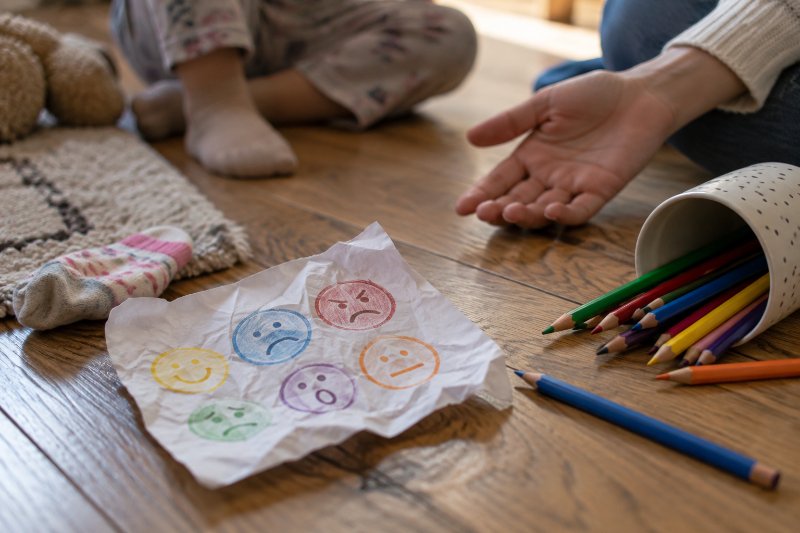
How to Help a Child With Big Emotions: 10 Parent Tips
Big emotions are not problems to erase. By staying calm, looking beneath behavior, and holding clear boundaries, parents can keep children safe while helping them build regulation skills over time.
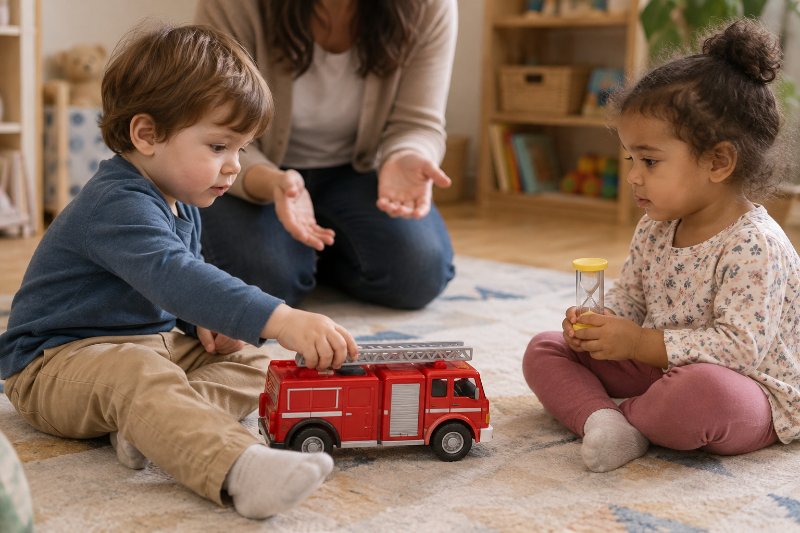
Sharing vs. Taking Turns: What Toddlers Need to Learn
Clear requests help toddlers build generosity and boundaries: sharing can mean using an item together or offering part, while taking turns means each child gets separate time with it.
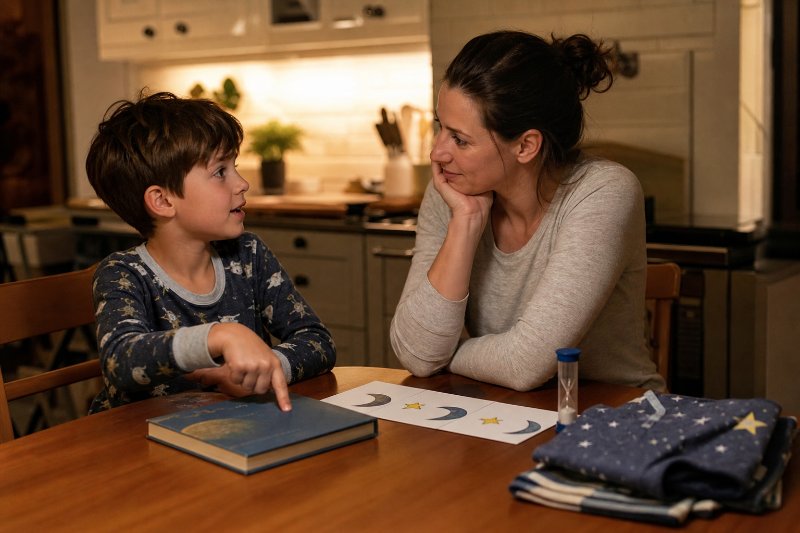
How to Choose Emotionally Supportive Bedtime Stories for Kids in Portland
Portland bedtime stories for kids work best when emotionally safe characters face relatable challenges, giving families room for calm conversations that help settle lingering feelings.