
FAQ: SEL Books for Parents and Educators
Kelly Anderson
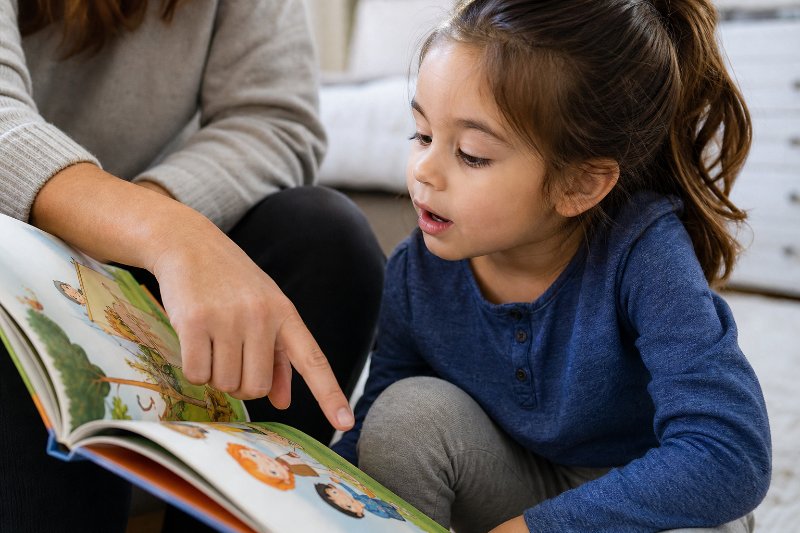
When a child points to a crying character and asks, “Why is she sad?” you are hearing more than a reading question. You are hearing emotional learning begin in real time. A picture book gives your child enough distance to talk about big feelings without being the center of the story, and enough closeness to say, “That feels like me.” For parents and early childhood educators, SEL-focused children’s books can feel both comforting and confusing. You may wonder how often to read them, whether bedtime is the best time, what to say after the story, or how to know whether the books are actually helping. You may also wonder if you need a special curriculum, or if a warm lap, a good story, and a few thoughtful questions are enough. This FAQ is designed to answer those everyday questions honestly. SEL books are not a quick fix, but when used with patience and care, they can become one of the gentlest tools you have for building emotional vocabulary, empathy, self-expression, resilience, and parent-child connection.
Why SEL-focused children’s books matter right now
What does “SEL-focused” mean in a children’s book?
SEL stands for social-emotional learning. In plain language, it means helping children understand feelings, build relationships, make caring choices, manage frustration, and develop confidence over time. An SEL-focused children’s book is not always a book that announces a lesson. Often, it is a story where a character feels nervous, jealous, proud, left out, brave, disappointed, or loved. The story may show a child calming down, asking for help, repairing a friendship, trying again, or naming a feeling. The emotional learning happens through gentle storytelling, not lectures. Research supports this kind of story-based learning. A recent ERIC article on read-alouds with social-emotional learning describes using multicultural texts to give young children opportunities to connect with themselves and the wider world through SEL-rich discussion, as shared in “Connecting to Themselves and the World”.
Why use books instead of simply talking about feelings?
Direct talks can be helpful, but young children often understand emotions more easily when they see them in a character. A story creates emotional safety. Your child can talk about the bear who yelled, the bunny who hid, or the child who missed a parent, without feeling blamed or exposed. Books also slow the moment down. In real life, anger may arrive quickly. In a story, you can pause on one page and ask, “What do you think her body feels like right now?” or “What might help him feel safe?” That pause helps children practice noticing feelings before those feelings become too large.
Are SEL books only for children who struggle with behavior?
No. SEL books are for all children. Every child experiences disappointment, worry, excitement, frustration, and the need for connection. Emotional learning is not a punishment or a repair tool for “difficult” behavior. It is part of healthy early childhood development. For a child who is shy, a story may offer words for nervousness. For a child who reacts loudly, it may show another way to handle anger. For a child who seems easygoing, it may build empathy for classmates, siblings, or friends who express feelings differently.
Key factors to weigh when choosing and using SEL books
What should you look for in a strong SEL book?
Look for stories that feel emotionally honest. Children can sense when a book is too tidy or preachy. A strong SEL book usually includes a relatable feeling, a clear situation, caring adults or peers, and a resolution that feels hopeful without pretending everything is simple. The illustrations matter, too. Young children read faces, body posture, color, space, and movement. A child may notice clenched hands, teary eyes, or a character standing apart from a group before they can explain those details in words. Wordless books and picture-heavy stories can be especially useful because they invite children to infer what is happening and describe what they see. Research on interactive book reading and journaling found positive effects on preschoolers’ emotion regulation skills, according to a study on shared book reading and journaling. The key idea for parents and educators is that the adult’s interaction around the book matters, not only the printed words.
Does the adult’s role really make that much difference?
Yes. The book opens the door, but your presence helps your child walk through it. When you ask gentle questions, name emotions, and connect the story to real life, you help your child make meaning. You do not need to turn storytime into a lesson. In fact, the best conversations often feel light and natural. You might say, “His face looks worried,” or “I wonder if she wanted someone to sit with her.” These comments show your child how to notice feelings without pressure. Educators can use the same approach during circle time or small-group reading. A teacher might pause and invite children to show a worried face, suggest a kind choice, or think about what a character needs. The goal is not to force a correct answer. The goal is to help children practice emotional awareness in a safe shared space.
Should SEL books match a current challenge?
Sometimes, yes. If your child is starting preschool, welcoming a sibling, grieving a pet, or struggling with bedtime fears, a related book can offer comfort and language. But you do not always need to match the exact issue. A book about a character feeling left out may help with sibling jealousy. A story about being afraid of the dark may open a conversation about separation at school. Feelings often overlap. What matters most is whether your child can connect with the emotional experience.
Questions parents and educators ask most
How often should you read SEL-focused books?
There is no single rule. For many families, a few times a week works well. For classrooms, SEL read-alouds may fit naturally into weekly themes, morning meetings, rest time, or conflict-repair conversations. Repetition is helpful. Children often need to hear a story several times before they begin using its language. The first reading may be about plot. The second may be about pictures. The third may bring a quiet comment like, “He is mad because nobody listened.” That is meaningful progress. If your child asks for the same book again and again, that does not mean you are stuck. It may mean the story is helping your child work through something emotionally. Repeated bedtime stories can be especially soothing because familiar words create predictability.
What is the best time of day to read them?
The best time is when your child has enough calm to listen and enough connection to engage. Bedtime can be beautiful for gentle stories about safety, love, worry, and repair. Morning can work well for books about confidence, separation, or trying something new. After school or child care can be a good time, but only if your child is not too tired or hungry. If a child is in the middle of a very big feeling, it may not be the moment for a full book. You can offer comfort first. Later, when the body has settled, a story can help reflect on what happened without shame.
How much should you talk during the story?
Think of conversation as seasoning, not the whole meal. Some children enjoy frequent pauses. Others want the story to flow. Watch your child’s body language. If they lean in, answer, point, or ask questions, keep talking. If they turn away or seem restless, read more and pause less. Simple prompts are often enough. You might ask, “What do you notice?” “How do you think he feels?” “What could help?” or “Have you ever felt that way?” Open questions give children room to think. If your child does not answer, you can model gently: “I think she might feel disappointed because her tower fell.”
Are SEL books the same as therapy?
No. SEL books can support emotional regulation, empathy, and self-expression, but they are not a replacement for professional help when a child needs it. If your child’s fear, sadness, aggression, sleep trouble, or distress feels intense, persistent, or unsafe, it is wise to speak with a pediatrician, child therapist, school counselor, or another qualified professional. Books can still be part of a support plan. They can give shared language at home or in the classroom. But they should not carry the full weight of a child’s mental health needs.
What if your child does not want to talk about the feelings?
That is okay. Some children process quietly. Others need time before they can speak about emotions. You can keep the door open with low-pressure comments: “That was a hard moment for the character,” or “I’m glad someone helped.” You can also invite nonverbal responses. Your child might point to the face that matches the feeling, choose a stuffed animal to comfort the character, draw a scene, or act out a different ending. Emotional learning includes words, but it also includes play, movement, art, and closeness.
How can educators use SEL books without making children share private feelings?
Keep the focus on the character first. Ask, “What might the character be feeling?” rather than “Who here feels this way at home?” Children should not feel pushed to reveal personal experiences in front of a group. You can still build empathy and reflection. Invite children to notice facial expressions, suggest kind actions, or practice calming breaths with the character. If a child chooses to share personally, respond with warmth and keep the group emotionally safe.
How to tell whether SEL books are making a difference
What changes should you look for?
Impact may be quiet. You may hear your child use a feeling word they did not use before. You may notice a pause before grabbing a toy, a new attempt to say “I’m mad,” or a small act of comfort toward a sibling. In a classroom, you may hear children refer back to a character during a conflict or use story language during play. These signs do not mean your child will always manage feelings calmly. Young children are still learning. Progress often looks like shorter storms, faster repair, more words, or a growing willingness to accept comfort.
Can you measure the impact without making it formal?
Yes. You can simply pay attention to patterns. Notice whether your child names more feelings, asks more questions about others, tries calming strategies from stories, or talks about characters during everyday life. Educators may observe the same themes during play, peer interactions, group discussion, and art. The goal is not to grade emotions. The goal is to see whether stories are becoming part of the child’s emotional toolkit.
What if you are not seeing any change?
Give it time, and consider how the books are being used. If you are only reading the words and closing the cover, try adding one or two gentle comments. If the books feel too advanced, choose simpler stories with clearer facial expressions and familiar situations. If your child resists, switch to humor, animals, wordless books, or shorter bedtime stories. And remember, some growth is hidden at first. A child may not use a phrase for weeks, then suddenly say, “I need space,” because the language has been settling in quietly.
Putting SEL books into everyday practice
How can you make storytime feel natural?
Let the story lead. Curl up, read slowly, and allow small pauses. You might trace the character’s emotional path with your voice, softer during sadness, brighter during relief, calmer during repair. Children learn not only from the words, but from the feeling of being safe with you while emotions are named. After the book, you do not need a big discussion. A simple bridge to real life is enough: “If you ever feel that worried, you can tell me,” or “That character took a breath before trying again. We can practice that sometime.”
How can SEL books support bedtime?
Bedtime is often when feelings rise to the surface. The room gets quiet, separation is near, and the day begins to replay. Gentle SEL bedtime stories can help children feel seen before sleep. Choose books with soothing rhythms, reassuring endings, and emotional safety. If the story brings up worries, respond softly and briefly. Bedtime is usually not the best time for deep problem-solving. It is a time for comfort, connection, and a sense that tomorrow can be held with hope.
How can families and teachers work together?
When the same emotional language appears at home and school, children receive a steady message. Parents can ask teachers which feeling words or calming phrases are being used in the classroom. Educators can suggest books connected to current classroom themes, such as friendship, patience, courage, or repair. You do not need identical scripts. You need shared warmth. A child who hears, “You can name the feeling,” in one setting and, “Your feelings are safe with me,” in another is receiving a powerful foundation.
A gentle way forward with SEL books
SEL-focused children’s books work best when they are treated as relationship tools, not quick fixes. The story matters, but so does your voice, your patience, your curiosity, and your willingness to return to the same feelings again and again. Through shared reading, children can practice emotional vocabulary, empathy, self-expression, and resilience in a way that feels safe and connected. If you are building a home or classroom library around big feelings, bedtime stories, and early childhood emotional learning, the Zebra Baby books emotional learning series offers gentle stories created to support those tender conversations. You can visit Zebra Baby’s emotional learning books when you are ready to choose stories that help children feel understood, connected, and a little more confident with their feelings.
Sources
Disclaimer: Zebra Baby content is created for educational and storytelling purposes only and is not a substitute for professional medical, mental health, or therapeutic advice.
Related Articles

Why Stories Teach Empathy Best in Kids
Stories give children a safe way to practice compassion by watching characters feel left out, worried, or hurt, then seeing kindness and repair in action. That emotional rehearsal helps empathy grow more naturally than direct instruction alone.
How to Extend Storytime: Emotional Learning
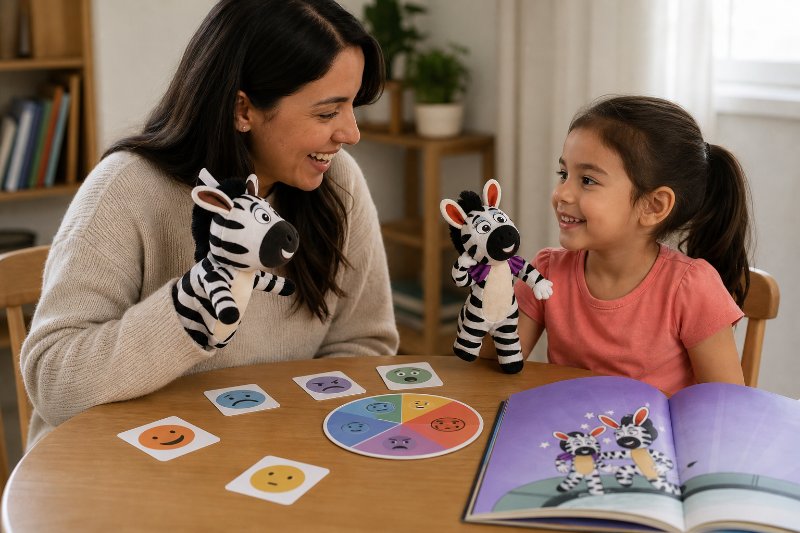
Storytime sticks when children act out, draw, or talk through a character’s feelings after the book ends. Those simple follow-ups turn a picture book into real practice with naming emotions, empathy, and self-expression.
How to Build Emotional Vocabulary Before 5
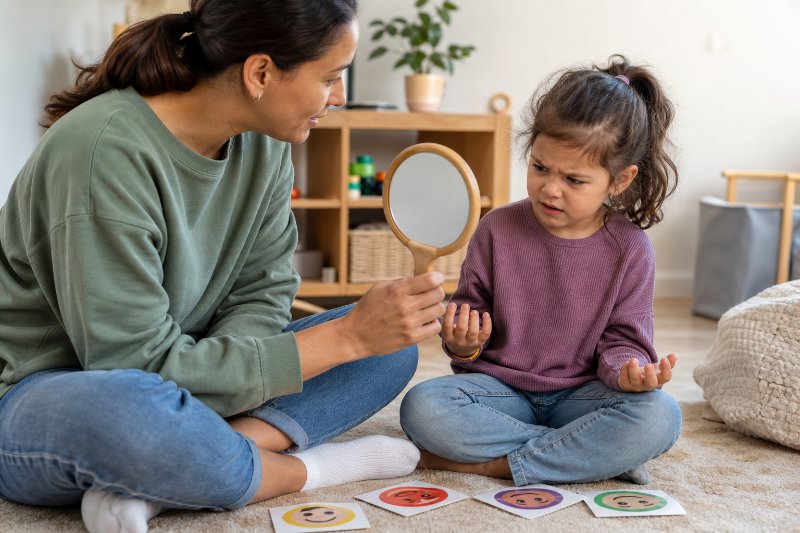
Simple, repeated moments at home, during meals, cleanup, or bedtime, give young children the words for big feelings before those feelings turn into tears, grabbing, or shutdowns.