
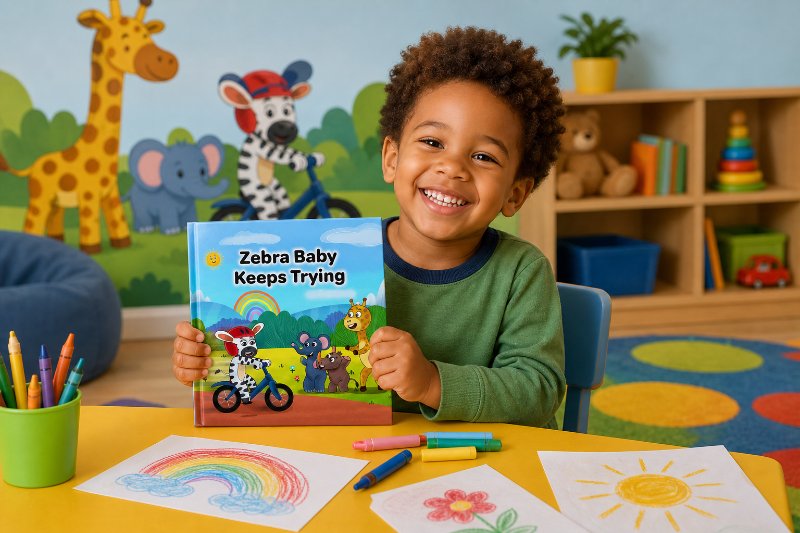
Zebra Baby Keeps Trying: A New Children's Book About Perseverance
Kelly Anderson
Some of the hardest moments in early childhood begin with two small words: “I can’t.” A block tower tumbles. A shoe will not slide onto the right foot. A drawing does not match the picture in a child’s mind. Frustration builds, and the urge to stop may feel stronger than the desire to try again. The newest title in the Zebra Baby Emotional Learning Series, Zebra Baby Keeps Trying, gives families a gentle way to talk about these moments. The picture book follows Zebra Baby as she learns that effort matters, even when practicing something new feels difficult. Created for children ages 2 to 6, the story explores perseverance and resilience through a warm, relatable character. The official Zebra Baby book description shares a simple message: When learning something new feels hard, every attempt can help Zebra Baby grow a little stronger.
Why Learning to Keep Trying Matters in Early Childhood
Young children are learning new skills almost constantly. They are practicing how to communicate, get dressed, share space, follow routines, use their bodies, solve problems, and manage big feelings. What appears simple to an adult may require tremendous concentration and effort from a child. When a child gives up quickly, the task may simply feel confusing, overwhelming, or too difficult in that moment. The child may be tired, overstimulated, worried about making a mistake, or unsure how to ask for support. Sometimes “I can’t” really means, “This feeling is too big for me right now.” Perseverance develops best when children also feel emotionally safe. They need room to struggle without feeling embarrassed, rushed, or pressured. They also need caring adults who recognize effort, offer calm encouragement, and understand when a pause may be necessary. Stories can help create that safe space. A child can watch a character experience frustration without personally feeling pressured to perform. Together, families can notice what the character feels, talk about what happens next, and consider what another attempt might look like. A 2025 narrative review indexed by the National Library of Medicine examined shared book-reading interventions and their role in promoting social and emotional competence among children in nursery and preschool settings. The research supports the broader value of shared reading for emotional learning, although it did not evaluate Zebra Baby Keeps Trying specifically.
What Makes a Perseverance Story Meaningful
A thoughtful story about resilience does more than tell a child to try harder. It respects the emotions surrounding a challenge and makes room for support, flexibility, and rest. Several qualities can help a book’s message feel encouraging rather than demanding.
The character’s struggle feels recognizable
Children often connect with stories that reflect familiar emotions. They may not have faced the character’s exact challenge, but they understand what it feels like to want something to work and become upset when it does not. That sense of recognition can encourage self-expression. A child might point to the character and say, “She’s mad,” “She wants to stop,” or “That happened to me.” These brief comments can create valuable opportunities for parent-child connection. You do not need to turn every comment into a long lesson. A warm response such as, “Yes, it is hard when something does not work yet,” may be enough. Feeling heard can matter more than receiving an explanation.
Trying is presented as flexible, not forceful
Healthy persistence can include changing the approach, asking for help, taking a break, or returning later. It does not mean pushing through every task regardless of discomfort or distress. This distinction matters because children may otherwise hear “keep trying” as “your feelings do not matter.” A gentler message is that frustration is allowed and support is available. A child can feel disappointed while remaining capable of learning. During storytime, you might say, “Zebra Baby is having a hard time, and she can take a breath before deciding what to do next.” This language makes room for both resilience and emotional regulation.
Growth is noticed without demanding perfection
Children often focus on the final result. The tower is either standing or broken. The zipper is either closed or open. The puzzle is either complete or incomplete. You can help your child notice the learning taking place between those outcomes. Perhaps your child balanced two blocks before the third one fell. Maybe one shoe went on with less help than yesterday. These moments are meaningful signs of effort, practice, and progress. Praise can remain specific and grounded. Instead of saying, “You are the best,” try, “You kept working even after that piece did not fit.” This helps your child connect confidence with choices they can make, rather than with always succeeding.
Questions Parents May Have About “Keep Trying”
Perseverance is a hopeful idea, but it can also raise practical questions. Parents often want to encourage resilience without creating pressure or overlooking genuine physical and emotional needs.
Does stopping mean my child has failed?
No. A child may need food, movement, sleep, reassurance, or a simpler version of the task. Stopping can be a form of communication, especially when a child does not yet have the words to explain what feels wrong. You can acknowledge the pause while preserving the possibility of returning. “You are done for now” feels different from “You gave up.” The first statement respects the child’s current limit while keeping the experience emotionally safe. Later, you might casually offer the activity again. Avoid making the return feel like a test. A calm, neutral tone can communicate that learning does not have to happen according to a strict schedule.
Should I reward every attempt?
Encouragement does not always need to include a prize. Your attention, warmth, and specific observations can be deeply meaningful. Try noticing what actually happened: “You tried a different spot for that puzzle piece,” or “You asked me for help instead of throwing it.” These comments show your child that effort, communication, and problem-solving deserve recognition. External rewards may sometimes fit a family routine, but they are not necessary for every challenging task. The goal is to help your child develop a growing sense of capability, not to make each attempt dependent on receiving something afterward.
What if my child does not want to discuss the story?
Listening quietly is still a form of participation. Some children talk throughout a book, while others take in the pictures, rhythm, and emotional tone without commenting. Avoid quizzing your child about the story’s lesson. Questions such as, “What should Zebra Baby do?” may feel enjoyable one day and demanding the next. Instead, you can make a simple observation: “Her face looks frustrated.” Then pause and allow your child to respond, or not respond. Your child may mention the story hours or days later during a completely different activity. Emotional learning often appears through small, spontaneous connections rather than immediate explanations.
Bringing the Book’s Message Into Everyday Moments
The value of a perseverance story can continue after the book is closed. You can gently borrow its language during everyday challenges without repeating the message so often that it begins to feel like a lecture.
Use “yet” with care
Adding “yet” to a statement can leave room for growth. “You cannot tie your shoes yet” sounds more hopeful than treating the current difficulty as permanent. Still, “yet” should not be used to dismiss emotion. Pair it with understanding: “You cannot do it by yourself yet, and I can see how frustrating that feels.” This recognizes both the possibility of growth and the reality of the child’s feelings.
Model imperfect effort
Children benefit from seeing trusted adults make ordinary mistakes without shame. If you drop something, forget a word, or need to repeat a task, describe the moment calmly. You might say, “That did not work the way I expected. I am going to try another way.” This shows that mistakes are a normal part of everyday life. There is no need to stage failures or give a long speech. Natural moments provide meaningful examples.
Create a storytime conversation, not a lesson
While reading Zebra Baby Keeps Trying, follow your child’s interest. Pause when they point to an illustration. Repeat a favorite line. Let them return to an earlier page if they want to see what happened again. You can also connect the story to a recent experience without expecting a response. You might say, “This reminds me of when your train track kept falling and you tried a new shape.” Keep the tone curious and affectionate rather than corrective. The book is available through Amazon and its dedicated IngramSpark purchase listing for families, caregivers, and early childhood settings interested in adding a perseverance-focused story to their reading collection.
A Gentle Message Children Can Carry Forward
Resilience does not mean never crying, never stopping, or completing every difficult task without help. It grows as children learn that struggle is not something to fear or hide. They can feel frustrated, receive support, adjust their approach, and try again when they are ready. Books give families a shared language for these experiences. Through Zebra Baby’s story, a difficult moment can feel less lonely. Children can see that challenges are part of learning and that every sincere attempt has value, even when progress is not immediate.
The Zebra Baby Emotional Learning Series offers gentle stories that help children build confidence, resilience, self expression, and emotional understanding.
Sources
Shared Book Reading and Promoting Social and Emotional Competences in Educational Settings: A Narrative Review, National Library of Medicine
Disclaimer: Zebra Baby content is created for educational and storytelling purposes only and is not a substitute for professional medical, mental health, or therapeutic advice.
Related Articles
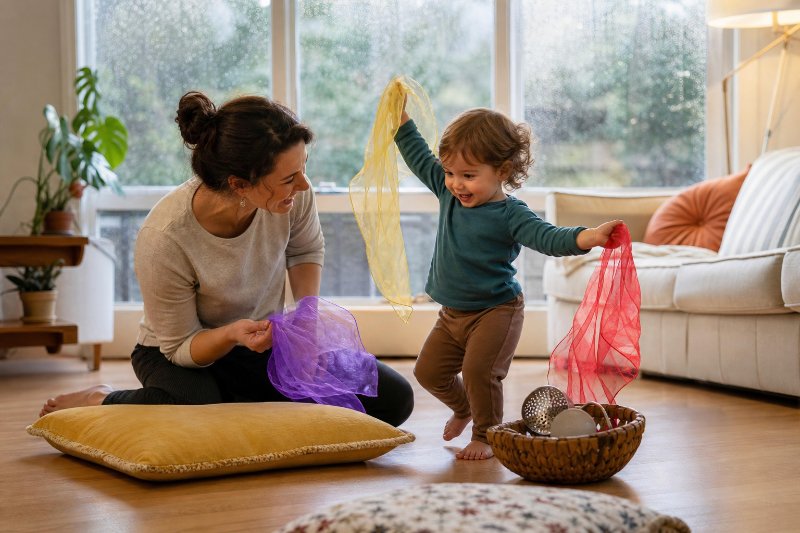
20 No-Prep Rainy Day Toddler Ideas
Rainy-day toddler play does not need crafts or supplies, simple movement, pretend play, and cozy indoor games can ease frustration while building flexibility, language, and connection.

How To Choose The Best Emotional Learning Books for Kids
The best picks use story, not lectures, to build empathy and emotional literacy, helping children practice feelings through characters who are sad, angry, left out, or brave.
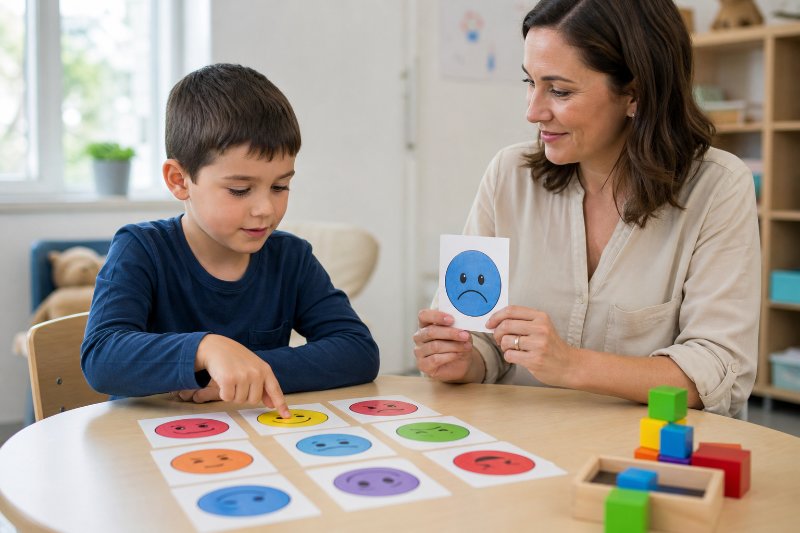
Social vs. Emotional Learning for Kids
Social and emotional learning is less about calming down in the moment than building the relationship skills that help children wait, take turns, handle “no,” and repair hurt. Those small habits shape how they belong at home, in school, and with friends.