

Prepare Your Child Emotionally for Changes
Transitions can make childhood feel suddenly larger. One week your child knows where their shoes go, who picks them up, which cup is theirs, and what happens after bath. Then school begins. A new baby arrives. A moving truck parks outside. A beloved caregiver changes. The season shifts, and with it, your child’s sense of what comes next. For adults, these changes may feel explainable. You can name the reason, make the plan, and look ahead. For young children, especially in early childhood, change is often felt before it is fully understood. It may appear as clinginess, bedtime tears, bathroom accidents, tantrums, silence, bossiness, or sudden worries about things that used to feel simple. This does not mean your child is being difficult. It often means their inner world is working hard to keep up with their outer world. Books, conversation, and simple emotional tools can give children a safe way to practice what change feels like before, during, and after it happens.
Why Transitions Feel So Big in Early Childhood
A transition is not only the event itself. It is the emotional space around the event. Starting preschool is not just a new classroom. It is separation, unfamiliar adults, different sounds, new rules, and the question, “Will my grown-up come back?” Welcoming a sibling is not only meeting a baby. It is sharing attention, hearing more crying, waiting longer, and wondering, “Do I still matter as much?” Children do not always have words for these questions. Their bodies may speak first. You might notice changes in sleep, appetite, play, or behavior. A child who is excited about kindergarten may still cry at drop-off. A child who kisses the new baby gently may also throw toys an hour later. Mixed feelings are not a problem to erase. They are a normal part of adjusting.
Change can feel like a loss of control
Young children feel safer when life has a rhythm. They like knowing who is coming, what happens next, and where they belong. When that rhythm changes, even for happy reasons, your child may try to regain control in small ways. They may insist on the same pajamas, refuse a different breakfast, or ask the same question repeatedly. These behaviors can be tiring, but they are also clues. Your child is asking for steadiness. You can answer with calm repetition, warm boundaries, and small choices. “You cannot choose whether we go to school, but you can choose whether to carry your blue backpack or your green one.” This kind of response protects emotional safety while still helping the day move forward.
Big feelings need both comfort and practice
Research continues to point to the value of social and emotional learning during transition periods. A study on children moving from kindergarten to primary school found that early social and emotional learning can support positive transitions, highlighting the importance of helping children build emotional skills before and during change through early SEL research on school transitions. That matters because children need more than reassurance. They need practice naming feelings, asking for help, waiting, separating, reconnecting, and trying again after something feels hard. These skills grow through repetition, not one big talk.
Using Books as Gentle Rehearsal for Change
A picture book can become a gentle practice space. Children can meet a character who is worried about school, jealous of a baby, sad about moving, or unsure about a new routine. Because the story is happening to someone else, your child can explore feelings without feeling put on the spot. Books also slow things down. In real life, the school door opens, the baby cries, the box gets packed, and the goodbye happens quickly. In a story, you can pause on one page. You can ask, “What do you think the bunny feels here?” or say, “That face looks like a worried face.” These small pauses teach emotional awareness in a way that feels natural. For more on how stories help children understand feelings in others, read Why Stories Teach Empathy Best in Kids.
Choose stories that leave room for many feelings
The most helpful transition books do not hurry children toward cheerfulness. A story about moving does not need to pretend that leaving a bedroom, neighbor, or familiar playground is easy. A story about becoming an older sibling does not need to make jealousy disappear by the final page. Look for books where feelings are named with kindness and the child character is not shamed for having them. A good transition story often includes three things: a childlike worry, a caring adult, and a sense that feelings can change over time. It does not need to be dramatic. Sometimes the most powerful moment is a character taking a deep breath, holding a comfort object, or being welcomed back after crying.
Read before the change, and keep reading after
It is tempting to bring out a book only when the hard moment has arrived. But children often benefit from meeting an idea in story form before they are expected to live it. If school starts in a few weeks, begin reading school stories during calm parts of the day. If a baby is due soon, read sibling stories before the house fills with diapers, visitors, and interrupted sleep. After the transition, keep the books nearby. A child may understand a story differently once they have lived the experience. The same page that once seemed funny may suddenly invite a serious question. Re-reading is not a lack of progress. It is how young children deepen understanding.
Talking About Change Without Overloading Your Child
Conversation helps children make meaning, but long explanations can be too much. You do not need to cover every detail at once. Short, honest, repeated messages usually work better than one careful speech. For starting school, you might say, “You will stay with your teacher. I will come back after rest time.” For a new sibling, “The baby needs many things, and you are still my beloved child.” For a move, “This home has many memories. We can feel sad and still get ready for our new home.”
Use plain words for emotions
When children hear simple feeling words, they slowly learn to use them. Try naming what you see without deciding for them. “Your hands are tight, and your voice is loud. I wonder if you feel mad that I am holding the baby.” Or, “You got quiet when we talked about the new classroom. Sometimes quiet means worried.” These guesses are invitations, not final answers. Your child might correct you. That is helpful too. Self-expression grows when children feel free to say, “No, I’m not mad. I’m scared.”
Let questions repeat without treating them as defiance
During transitions, children often ask the same question again and again. “Will you come back?” “Where will my bed go?” “Does the baby live here forever?” Repeated questions may be your child’s way of seeking safety, not testing your patience. You can answer consistently and warmly. “Yes, I will come back after snack. Your teacher will help you until then.” If the question continues, you can add a comforting ritual. “Let’s say it together: hug, goodbye, school, snack, grown-up comes back.”
Emotional Tools That Help Children Feel Steady
Emotional tools do not have to be complicated. They work best when they are simple enough to use on an ordinary Tuesday morning, in the car, at bedtime, or while standing beside a half-packed moving box. A broad review of child and youth mental health research found that psychosocial interventions, meaning supportive approaches that focus on thoughts, feelings, behavior, and relationships, improved anxiety outcomes compared with controls in the studies reviewed through an umbrella review of psychosocial interventions for anxiety. For parents, the practical message is gentle and hopeful: supportive emotional practices can matter.
Create a small goodbye ritual
Goodbyes are easier when they are predictable. A ritual can be as simple as two hugs, one phrase, and a wave from the same spot. The power is not in making the goodbye tear-free. The power is in giving your child’s body a familiar pattern. Try not to sneak away, even if it seems kinder in the moment. A clear goodbye may bring tears, but it also builds trust. Your child learns that you leave with love and return as promised.
Offer comfort objects with meaning
A small object can help your child carry connection into a new setting. It might be a family photo tucked into a backpack, a bracelet you both touch before drop-off, a note with a heart, or a tiny fabric square that smells like home. The object is not magic. It is a reminder: “My people are still my people, even when they are not in the room.” For a child welcoming a sibling, a comfort object might be a special basket of “baby-feeding books” used only when you sit with the baby. This can turn a hard waiting moment into a parent-child connection ritual.
Practice calming through play
Children learn emotional regulation through bodies and play. You can pretend a stuffed animal is nervous about school and help it breathe slowly. You can build a block house, move the animals to a new house, and talk about what they miss. You can let a doll feel jealous of a baby doll, then help the doll ask for a hug. This kind of play gives big feelings somewhere to go. It also lets you hear what your child may not yet be able to say directly.
zebra baby books emotional learning series
Disclaimer: Zebra Baby content is created for educational and storytelling purposes only and is not a substitute for professional medical, mental health, or therapeutic advice.
Related Articles
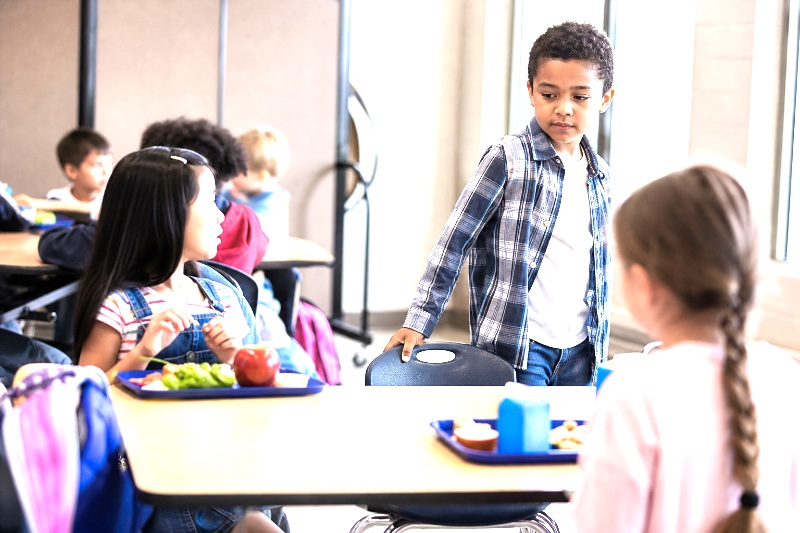
Why Stories Teach Empathy Best in Kids
Stories give children a safe way to practice compassion by watching characters feel left out, worried, or hurt, then seeing kindness and repair in action. That emotional rehearsal helps empathy grow more naturally than direct instruction alone.
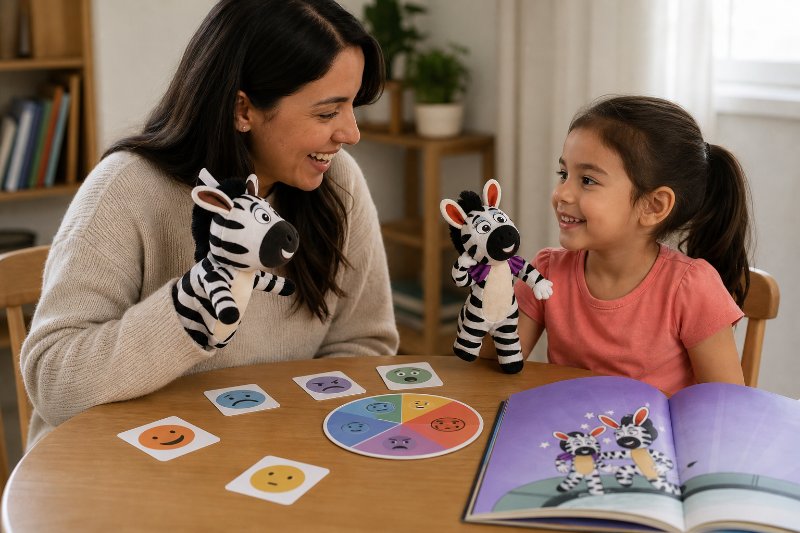
How to Extend Storytime: Emotional Learning
Storytime sticks when children act out, draw, or talk through a character’s feelings after the book ends. Those simple follow-ups turn a picture book into real practice with naming emotions, empathy, and self-expression.
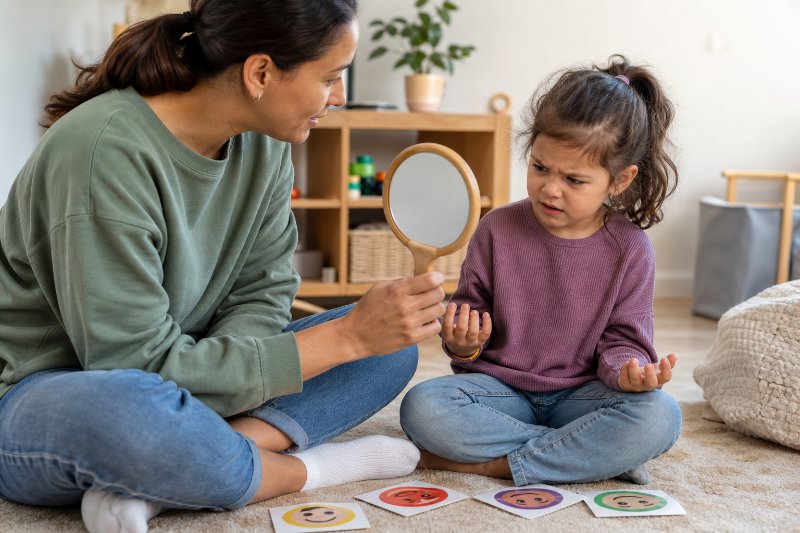
How to Build Emotional Vocabulary Before 5
Simple, repeated moments at home, during meals, cleanup, or bedtime, give young children the words for big feelings before those feelings turn into tears, grabbing, or shutdowns.