
Start Social Emotional Learning for Kids Before Kindergarten
Your child shouts, “I don’t care!” after losing a game, then bursts into tears five minutes later. Another child might become silent when a friend says no. These moments can leave you wondering how to teach skills that seem far more complicated than colors, letters, or numbers. For families in Portland, Oregon, social emotional learning for kids can become part of ordinary home life without turning your evenings into formal lessons. Zebra Baby supports this work through warm stories and practical learning materials that help children recognize feelings, communicate needs, recover from frustration, and remain proud of who they are. Emotional growth is gradual. Your child may understand a calming idea during storytime and still forget it during a difficult moment. That does not mean the idea failed. It means your child needs repeated, emotionally safe opportunities to practice.
Why Emotional Skills Can Be Hard to Use in the Moment
Young children often experience feelings before they have the words or self-control to explain them. A child who knocks down a block tower may not yet be able to say, “I worked hard, and I feel disappointed that it fell.” They may throw a block instead. This gap between feeling and communication is one reason children need patient emotional regulation support. Regulation does not mean making an emotion disappear. It means helping a child notice what is happening, remain safe, and choose an appropriate response with adult support.
Knowing a feeling is different from managing it
A child may correctly identify anger in a picture but still hit when a sibling takes a toy. Recognition is an important beginning, but it is not the complete skill. Children also need practice noticing body signals, using helpful language, accepting limits, and repairing relationships. Social emotional learning for kids often includes several connected abilities:
Recognizing and naming emotions
Expressing wants and limits respectfully
Understanding another person’s perspective
Waiting, adapting, and coping with disappointment
Asking for help
Making thoughtful choices
Repairing a relationship after conflict
These abilities develop through conversation, observation, play, stories, and supportive responses from adults. A single discussion can introduce a skill, while repeated use helps make it familiar.
Stress can temporarily hide a child’s abilities
You may hear your child use thoughtful feeling words at breakfast and then scream at the playground that afternoon. Strong emotion can make it difficult to retrieve a skill that is still developing. In that moment, lengthy explanations usually ask too much of an overwhelmed child. A short statement such as, “You wanted another turn, and stopping feels hard,” communicates understanding without removing the boundary. Once the intensity has passed, you can revisit what happened and consider another response together. Your calm presence matters because children often rely on an adult’s steadiness before they can regain their own. This is not indulgence. You can offer emotional safety while still holding a clear limit: “You may be angry. I will not let you hit.”
Choosing an Approach That Fits Your Family
There is no single format that works equally well for every child or household. In fact, a recent multilevel meta-analysis of preschool SEL interventions found that none of the studied components was superior. This supports a flexible approach rather than searching for one supposedly essential activity. The broader evidence is encouraging but should be understood with care. A meta-analysis of K-12 social and emotional learning programs associated participation with higher levels of prosocial behavior. Results can still vary according to the outcome being measured, the child’s engagement, and how a program is used.
Conversation-based learning
Everyday conversation costs nothing and allows you to respond to what is happening right now. You might name disappointment after a canceled outing or talk about nervousness before preschool. The advantage is relevance. The challenge is that children may resist talking while upset, and parents may struggle to find simple words under pressure. Conversation tends to work best when it is brief, respectful, and revisited later rather than forced during an emotional peak.
Books and gentle storytelling
Children’s emotional learning books give a child enough distance to consider a difficult feeling without being placed at the center of the discussion. A character can feel jealous, make a mistake, try again, or ask for help. Your child gets to observe the emotional pattern before discussing personal experiences. Bedtime stories can be especially useful because they attach emotional learning to an established routine. Still, bedtime should not become an interrogation. One thoughtful question is often enough: “What do you think helped the character feel safe?” A children’s book series can also provide useful continuity. Familiar characters and repeated language reduce the amount of explanation needed each time. The trade-off is that no book can respond to your child in real time, so stories are most effective when paired with warm adult attention.
Play, art, and movement
Some children communicate more freely through pretend play, drawing, puppets, or movement than through direct questions. A toy animal might say, “Nobody saved me a seat,” allowing your child to explore exclusion at a comfortable distance. This approach supports self-expression, but adults should avoid assigning a hidden meaning to every drawing or game. Follow your child’s lead. Reflect what you notice without pressing for a confession or explanation.
Digital and structured resources
Digital activities may appeal to children who enjoy interactive formats. A systematic review and meta-analysis of digital SEL interventions reported significant improvement in K-12 students’ social-emotional skills and a modest improvement in prosocial behavior. Digital tools may offer consistency, but they should not displace responsive human interaction. Research on student differences in an SEL program also emphasizes that engagement plays an important role in learning and motivation. A highly polished resource has limited value if your child avoids it or cannot connect it to daily life.
What Social-Emotional Learning Realistically Requires
Parents sometimes assume that effective social emotional learning for kids requires a costly curriculum or hours of preparation. It can involve paid resources, but the core investment is usually consistent attention rather than a large budget.
Costs can remain modest
Free options include library books, conversations, pretend play, and emotion-related activities using materials already in your home. Paid choices may include books, printable social-emotional learning resources, apps, classes, or professional services. Prices vary widely, so consider whether a resource matches your child’s interests and gives you language you can use beyond the activity itself. A well-chosen book may be read repeatedly and applied to many situations. An app may offer variety but involve a subscription and additional screen time. Parenting content can provide helpful phrases and ideas, although too many competing sources may leave you feeling less certain. Choose a manageable collection rather than trying to use everything. Portland, Oregon, families can also explore local libraries, preschool programs, community centers, pediatric providers, and school support staff. Availability and fees differ, so ask what is included, whether caregivers participate, and how learning is reinforced outside the session.
Progress does not follow a fixed schedule
You may notice new emotional words fairly quickly, while changes in behavior take longer. A child often needs to hear and practice a response many times before using it independently during conflict. Progress may look uneven. Your child might begin asking for help at home but continue grabbing toys at preschool. They may cope well when rested and struggle after a busy day. Context matters, and temporary setbacks do not erase growth. Social-emotional learning for children is more accurately viewed as ongoing development than a short program with a finish line. Even adults continue learning how to handle conflict, uncertainty, and big feelings.
Support should match the level of need
Home activities are useful for everyday emotional learning, but they are not a replacement for professional care. Consider speaking with your child’s pediatrician or another qualified professional if emotional or behavioral difficulties are intense, persistent, create safety concerns, or interfere significantly with sleep, learning, friendships, or family routines. Seeking professional input does not mean you have failed. It gives you more information and may help your child receive support suited to their needs.
Building a Sustainable Practice at Home
A useful starting point is to choose one recurring part of the day. Mealtimes, car rides, after-school connection, bath time, and bedtime can all hold short emotional conversations. Consistency helps, but the practice should remain flexible enough to fit real family life.
Use language your child can borrow
Instead of asking only, “How do you feel?” offer a small amount of support: “Did that feel disappointing, embarrassing, or something else?” Your child can accept your suggestion, correct it, or decline to answer. Modeling also matters. You might say, “I feel frustrated because the plan changed. I’m going to take a slow breath and think about what we can do instead.” This shows that emotions are manageable experiences, not reasons for shame. Keep phrases short enough to remember:
“I need space.”
“Can I have a turn next?”
“I’m not ready to talk yet.”
“Please help me.”
“I made a mistake. Can we try again?”
The goal is not a rehearsed child who always says the expected thing. The goal is growing confidence in honest, safe self-expression.
Pause during stories without turning them into tests
Gentle storytelling works best when connection remains more important than getting a correct answer. Notice facial expressions, choices, and changes in the character’s body or behavior. Invite curiosity with comments such as, “Her shoulders look tight,” or, “He kept trying even after that was hard.” If your child does not want to discuss the story, continue reading. Listening still has value. Your child may return to the character several days later when a similar feeling appears.
Notice recovery, repair, and effort
Praise can focus on a meaningful action rather than a broad label. “You were angry, and you used words instead of pushing” tells your child exactly what they did. “You checked on your friend after the argument” highlights empathy and repair. Social emotional learning for kids is not about preventing every outburst. It helps children build resilience by learning that difficult feelings can pass, mistakes can be repaired, and relationships can remain safe after conflict.
A Gentle Path Forward for Your Family
You do not need to teach every emotional skill at once. Begin with the feeling or situation showing up most often, choose language your child can understand, and pair it with conversation, play, or a relatable story. Small moments of connection can gradually create a strong foundation for confidence, empathy, and self-regulation. For parents in Portland, Oregon, Zebra Baby offers children’s emotional learning books, bedtime stories, parenting content, and emotionally supportive learning moments designed to help young children feel safe, understood, and proud of themselves. These resources can complement the care and encouragement you already provide at home.
When a story feels like the right doorway into your child’s big feelings, explore the emotional learning stories and resources available on the brand website, where you can also make contact through the online site. You may also browse the paperback series on Amazon and choose a warm, relatable story that reflects the confidence, resilience, or emotional language your child is developing.
Disclaimer: Zebra Baby content is created for educational and storytelling purposes only and is not a substitute for professional medical, mental health, or therapeutic advice.
The Zebra Baby series helps children feel safe, confident, emotionally understood, and proud of who they are through warm, relatable storytelling and emotionally supportive learning moments. You can also browse the Zebra Baby paperback series on Amazon and choose a story that speaks to the feelings your child is learning to express.
Related Articles

How to Choose Bedtime Stories That Help Portland Kids Wind Down
Choosing exciting or emotionally unresolved books at bedtime can keep children alert. Stories with a gentle rhythm, named feelings, and reassuring resolution help the day end more peacefully.
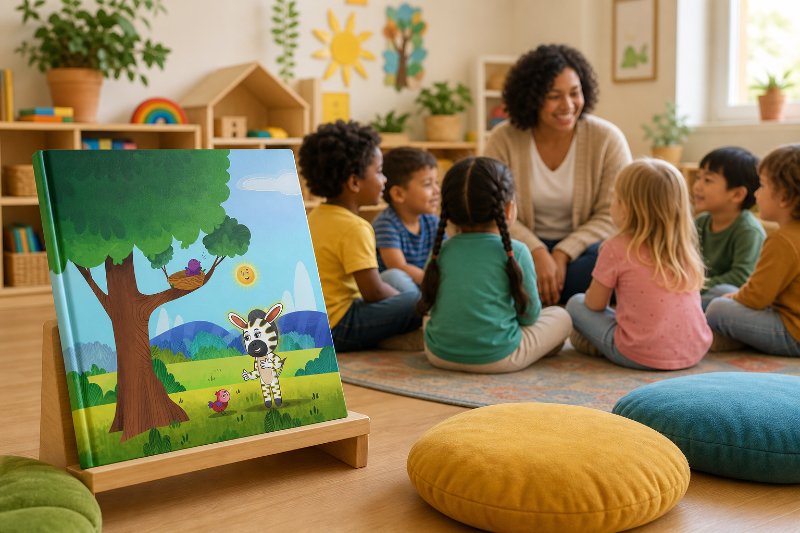
New SEL Book for Kids: Zebra Baby Believes in Herself
Kelly Anderson’s new picture book shows that confidence can be quiet: trusting feelings, asking for support, and taking a brave next step when something feels hard.
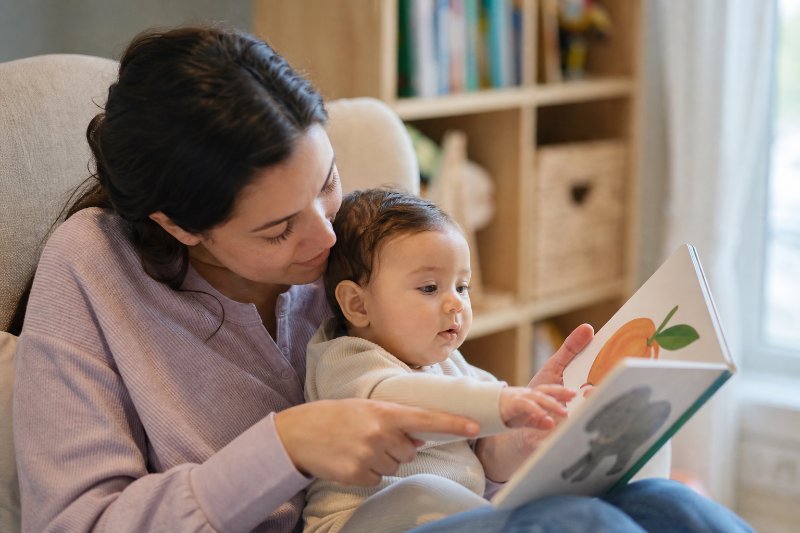
When Do Babies Start Understanding Books?
Babies begin “understanding” books long before they can follow a story, first through voice, closeness, and routine. By the later months, they start recognizing pictures, gestures, and repeated words.