

How to Choose Bedtime Stories That Help Portland Kids Wind Down
Kelly Anderson
Bedtime can bring a surprising mix of closeness and strain. Your child may ask for one more drink, worry about a sound outside, or suddenly remember something upsetting from earlier. You want the evening to end gently, but you may not always know which story will help your child settle without dismissing the feelings beneath the delay. Families searching for Portland bedtime stories for kids often need more than an entertaining book. You may be looking for language that helps your child feel understood, illustrations that hold their attention, and a reassuring ending that supports emotional safety. In Portland, Oregon, families can also draw inspiration from a community that values books, creative expression, and shared reading experiences. Zebra Baby creates warm, emotionally supportive stories for families who want reading to strengthen confidence, resilience, and parent-child connection. Rather than treating bedtime as a lesson your child must complete, gentle storytelling can turn it into a quiet place where big feelings are allowed to soften.
What Families Should Know About Emotionally Supportive Bedtime Stories
Not every pleasant picture book is well suited to bedtime. Some stories are exciting, noisy, suspenseful, or filled with rapid action. Those books can be wonderful earlier in the day, but they may leave a sensitive or energetic child more alert when the goal is rest. Bedtime books work best when their emotional rhythm supports the atmosphere you want to create. A story can contain uncertainty, frustration, or disappointment, but it should offer enough warmth and resolution for your child to feel secure by the final page.
The emotional tone matters as much as the plot
Young children often respond to the feeling of a story before they fully understand every word. They notice whether a character seems safe, whether a caregiver is emotionally available, and whether mistakes lead to shame or patient support. Children’s emotional learning books can gently show that feelings are temporary and manageable. A character might feel nervous before trying something new, disappointed after making a mistake, or lonely when a friend is unavailable. The most supportive stories do not rush past those emotions. They acknowledge them, give them understandable language, and show that connection remains available. This does not mean every bedtime story needs to address a serious concern. Humor, imagination, repetition, and everyday family moments all belong on the bedtime shelf. The key is choosing a tone that leaves your child feeling held rather than overstimulated.
Reading together is different from testing comprehension
Your child does not need to explain the message of a book for emotional learning to occur. They may absorb a comforting phrase, notice how a character recovers after frustration, or remember that an adult stayed close during a difficult moment. Questions can support self-expression, but too many questions may make storytime feel like schoolwork. Instead of asking your child to identify every emotion or recall each event, you can occasionally offer a gentle observation: “That character looked worried,” or “It seems like trying again was hard.” If your child wants to talk, follow their interest. If they simply lean against you and listen, that connection is meaningful too. Portland bedtime reading for kids should make room for conversation without requiring it.
Local story experiences can help you choose books
Libraries, independent bookstores, and author events can give you a chance to hear how a book sounds aloud before bringing it into your evening routine. According to Travel Portland’s coverage of indoor activities for children, Green Bean Books offers weekly story times along with events such as author visits and “Read to a Therapy Dog.” A public reading may help you notice whether your child responds to rhythmic language, realistic family stories, animal characters, or quiet humor. You can then look for similar qualities in bedtime stories for Portland kids without assuming that every popular title will suit your family.
How to Choose the Right Storytelling Brand or Book Provider
A trusted children’s book provider does more than use appealing illustrations or attach an educational label to a story. The words, emotional message, developmental fit, and treatment of childhood behavior all deserve attention.
Look for respect toward children’s feelings
A strong story does not portray fear, tears, shyness, anger, or hesitation as character flaws. It allows emotions to be real while showing safe ways to respond. For example, a story about perseverance should not imply that children must succeed immediately to be worthy. A story about confidence should not suggest that confident children never feel nervous. Healthy emotional regulation support for young children makes space for both truths: a child can struggle and still be capable, loved, and proud of who they are. Read several sample pages when possible. Notice how adults speak to children, how conflicts are resolved, and whether the main character has room to make choices. Gentle language should not mean an absence of boundaries. Children benefit from stories where limits are calm, clear, and connected to safety.
Consider developmental fit rather than age labels alone
Publisher age ranges are useful starting points, but you know your child’s interests, attention span, and sensitivities. Some preschoolers enjoy longer plots, while others prefer a brief story with repeated phrases. A child experiencing worry may need a simpler book than usual because emotional stress can make it harder to follow complex events. For early childhood bedtime reading, look at the amount of text on each page, the pace of scene changes, and the relationship between the words and pictures. Illustrations should help your child understand what is happening rather than add confusing visual activity. Repetition can be especially comforting. Familiar phrases give children a sense of what comes next, which may make the story feel emotionally safe.
Choose resources that support adults as well as children
A thoughtful provider may offer parenting content, conversation prompts, or social-emotional learning resources that explain the theme in plain language. These materials should help you respond with warmth, not make you feel judged. The strongest resources usually offer flexible ideas rather than rigid scripts. You might use a suggested question, adapt it to your child’s language, or skip it on a tired night. Your relationship matters more than performing a reading method correctly. A children’s book series can also provide continuity. When your child already trusts a familiar character, a new story about courage, disappointment, or persistence may feel easier to approach.
Questions to Ask and Warning Signs to Notice
Before selecting Portland children’s bedtime stories, consider what the author or brand appears to believe about children. Does the story treat behavior as communication, or does it rely on embarrassment and fear? Does it welcome different personalities, family experiences, and ways of expressing emotion?
Questions that reveal a book’s emotional quality
Ask yourself how the main character is treated during the hardest part of the story. Consider whether the resolution comes through support, practice, honest communication, or an unexplained change in behavior. Notice whether the book offers realistic hope without promising that difficult feelings disappear forever. You can also ask whether the story gives your child usable emotional language. Words such as worried, frustrated, proud, disappointed, calm, and hopeful help children communicate more precisely than simply saying they feel “good” or “bad.” Finally, consider how you feel while reading. If the text sounds awkward, preachy, or harsher aloud than it appeared on the page, you may be less likely to return to it. Bedtime stories are shared experiences, so the adult reader’s comfort matters.
Red flags in children’s emotional learning content
Be cautious with stories that shame a character for crying, reward emotional silence, or suggest that love depends on obedience. A book should not teach children that anger makes them bad or that bravery means ignoring fear. Overly instructional writing can also weaken connection. If every page explains the moral directly, your child may lose interest or feel corrected. Gentle storytelling usually allows the character’s experience to carry the meaning. Another warning sign is an instant solution to a complex feeling. Deep worry, grief, ongoing sleep difficulties, or intense behavioral changes cannot always be resolved through a single story. Books can provide language and comfort, but trustworthy providers should not present them as replacements for individualized care.
What to Expect From a Professional Emotional Learning Brand
Working with a professional storytelling brand usually means engaging with more than one book. You may encounter bedtime stories, downloadable materials, parenting content, and themes that continue across a children’s book series.
Clear purpose without pressure
A reputable brand should explain what each book addresses, such as self-confidence, perseverance, friendship, or coping with big feelings. This helps you select a story that fits your child’s current needs without turning ordinary emotions into problems. You should also expect age-aware language and an emotionally supportive resolution. The goal is not to make your child repeat a lesson. It is to create a moment in which they recognize themselves and feel less alone.
Practical support for shared reading
Good social-emotional learning resources respect that evenings are not always calm. You may pause midway through a book, shorten the conversation, or revisit a favorite page instead of finishing. Professional resources should support that flexibility. As you use bedtime stories for kids in Portland, you may notice that your child returns to certain phrases or characters. Repetition is not a failure to move forward. Familiar stories can offer predictability during changes, challenging days, or periods of heightened emotion. You can expect emotional learning to appear gradually. A child may not discuss a story at bedtime but may later use its language during play. Another child may ask for the same book whenever a familiar worry returns. These responses are invitations to remain present, not measurements of success.
Creating a Bedtime Shelf That Feels Like Home
A helpful collection does not need to be large. A small group of carefully chosen books can include a soothing favorite, a playful story, a book about trying again, and a story that reflects your child’s family, identity, or current concern. The best Portland bedtime stories for kids are ultimately the ones that protect connection. Choose emotionally respectful writing, calm pacing, relatable challenges, and resources that support you without demanding perfection. Across the Portland area, family reading can become a dependable signal that your child’s voice, feelings, and presence matter. When you want bedtime stories that help children feel safe, confident, emotionally understood, and proud of themselves, Zebra Baby offers warm learning moments through relatable characters and caring language. You can explore the series and related resources on the Zebra Baby website, then view the Zebra Baby children’s book series on Amazon when you are ready to choose a story for your family’s bedtime shelf.
Sources
Disclaimer: Zebra Baby content is created for educational and storytelling purposes only and is not a substitute for professional medical, mental health, or therapeutic advice.
Related Articles
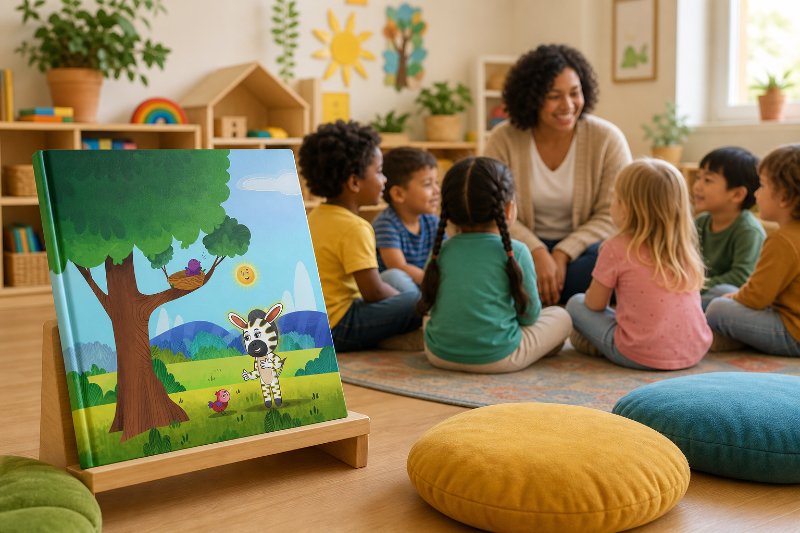
New SEL Book for Kids: Zebra Baby Believes in Herself
Kelly Anderson’s new picture book shows that confidence can be quiet: trusting feelings, asking for support, and taking a brave next step when something feels hard.

When Do Babies Start Understanding Books?
Babies begin “understanding” books long before they can follow a story, first through voice, closeness, and routine. By the later months, they start recognizing pictures, gestures, and repeated words.
Signs Your Child Struggles With Emotional Regulation
Frequent meltdowns, long recovery times, and trouble using words instead of hitting can signal more than a rough day. The article explains when big feelings are still typical and when extra support may help daily life feel calmer.